
How to Choose the Right Automatic Parking Barrier for Your Site
Release time:
2026-11-03
Choosing an automatic parking barrier is not just about buying a gate that opens and closes. The right system should suit your vehicle flow, driveway layout, security requirements, operating hours and existing car park management system. For Singapore sites—from condominium entrances and office buildings to shopping centres, industrial facilities and logistics yards—these factors help determine whether a standard boom gate, a high-speed barrier or an integrated access-control solution is the better fit.
1. Start with the Site's Vehicle Flow
Before comparing models, estimate how many vehicles pass through the entrance during normal periods and peak periods. A small private car park with predictable resident access may not need the same opening speed or duty cycle as a busy commercial car park, an industrial estate or a logistics facility handling frequent vehicle movements.
Check the following:
- Vehicles per hour at peak time and the likely queue length.
- Whether cars, vans, buses or heavy goods vehicles use the same lane.
- Whether the entrance operates 24/7 or only during business hours.
- Whether entry and exit are separated or share a single lane.
- Whether there is space for a vehicle to wait without blocking a public road or internal circulation route.
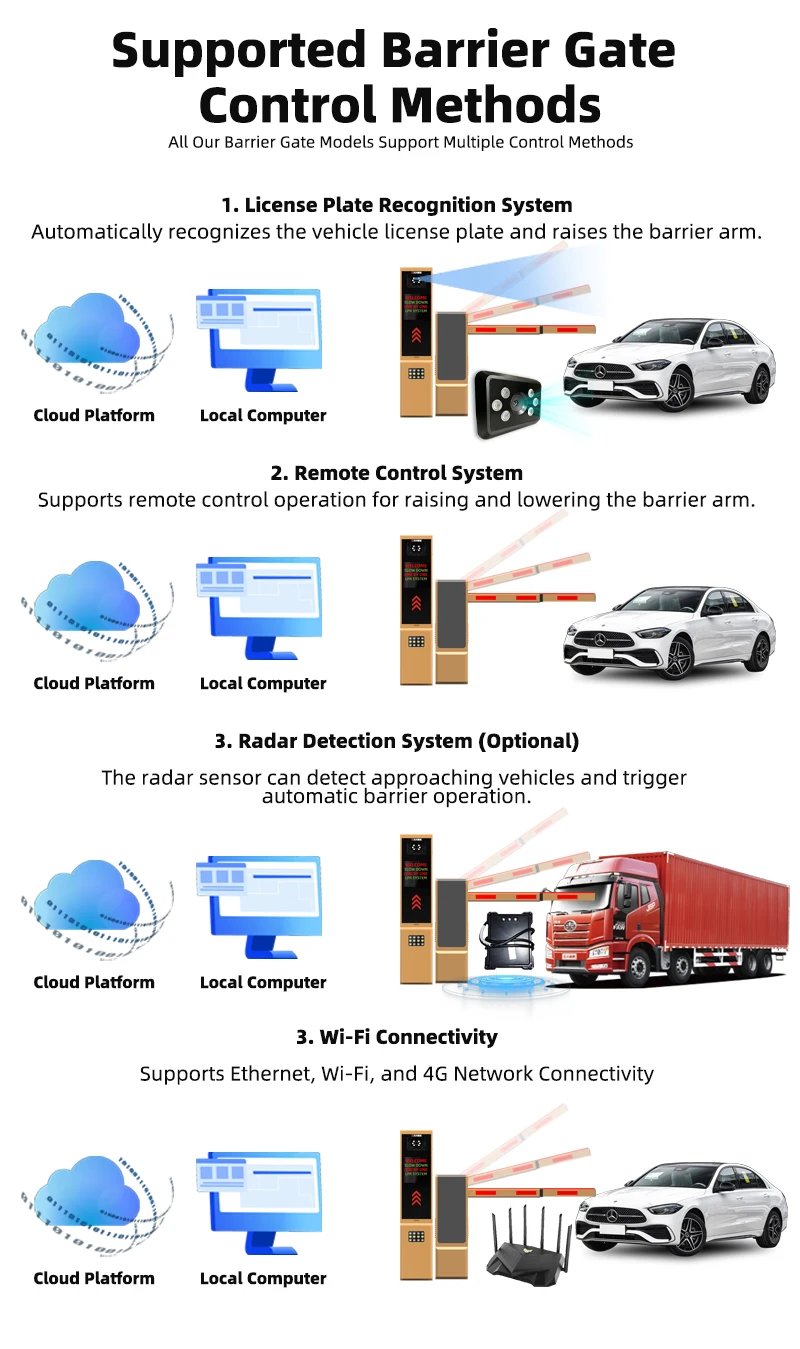
For high-volume sites, compare high-speed barrier gates and heavy-duty models, but do not select by speed alone. The complete opening cycle, vehicle detection, access authorisation and safe closing sequence all affect real throughput. Comparing automatic boom barrier gates as a system, rather than as a single arm, gives a more realistic view of performance.
2. Choose the Right Boom Arm for the Driveway
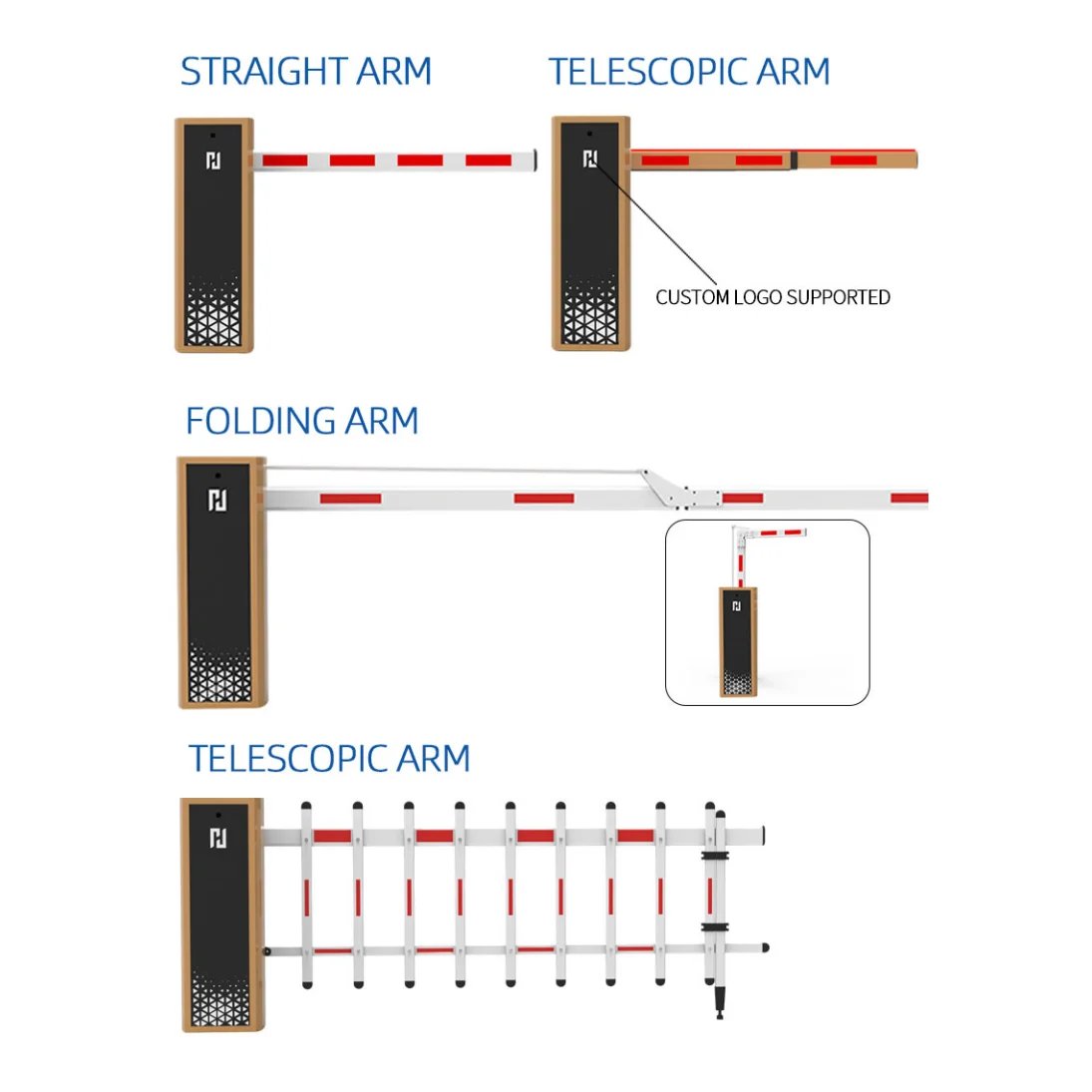
The boom arm must match the clear lane width and the physical space above and around the driveway. BAROXON's listed product range includes straight, folding and fence-style boom arm options, with arm lengths and configurations depending on the model. Confirm the usable arm length and compatible operator with the supplier before ordering.
Straight-arm barrier
A straight-arm boom gate is a common choice for open driveways with sufficient vertical clearance. It is often suitable for condominium entrances, office car parks, retail premises and general vehicle access points.
Folding-arm barrier
A folding arm can be considered where the boom must rise within a restricted overhead clearance, such as some basement car park entrances. Confirm the actual folding geometry, ceiling clearance and installation dimensions for the selected model.
Fence-style barrier
A fence-style arm can provide a more substantial visual and physical lane boundary where the application calls for it. Check the vehicle profile, arm design, wind exposure and the manufacturer's suitability guidance before specifying this option.
3. Match Opening Speed and Duty Cycle to Demand
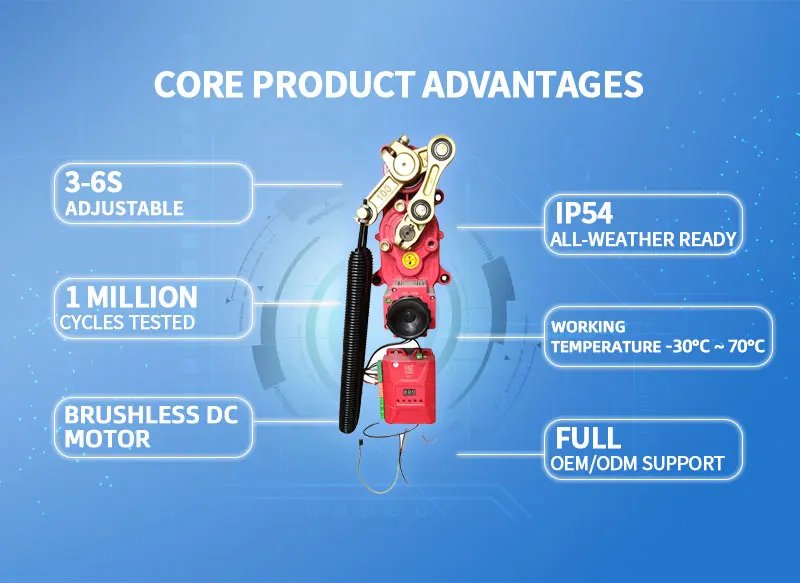
Opening speed affects queueing, but a faster barrier is not automatically the best choice for every site. A high-speed gate may be useful at a busy entrance, while a lower-speed configuration may be sufficient for a low-volume driveway. The selected arm length, motor type, control settings and safety equipment can affect operating performance.
Ask the supplier to confirm:
- The opening and closing time for the exact proposed model and arm length.
- The recommended daily cycle volume and duty-cycle rating.
- Whether the barrier is suitable for continuous or high-frequency operation.
- The expected behaviour during a power interruption and how the arm can be safely released or raised.
- The maintenance interval and availability of replacement parts.
Do not compare speed figures from different arm lengths or test conditions as if they were identical. Request model-specific technical data and, where needed, an on-site assessment.
4. Prioritise Vehicle and Pedestrian Safety
A parking barrier should work as part of a safety system, not as a standalone moving arm. Consider vehicle loop detectors, radar sensors, photoelectric safety devices, anti-collision functions and the control logic that prevents the arm from closing onto an authorised vehicle. The exact devices supported depend on the selected barrier and its controller. For entrances that need extra protection, an anti-collision automatic boom barrier can be specified as part of the lane design.
For sites with pedestrians near the vehicle lane, plan the pedestrian route separately where possible. Confirm how the system detects a vehicle, how it behaves if an obstacle remains under the arm and how the operator can stop or manually release the barrier in an emergency. Have the installer verify the safety devices during commissioning.
5. Decide How Drivers Will Be Authorised
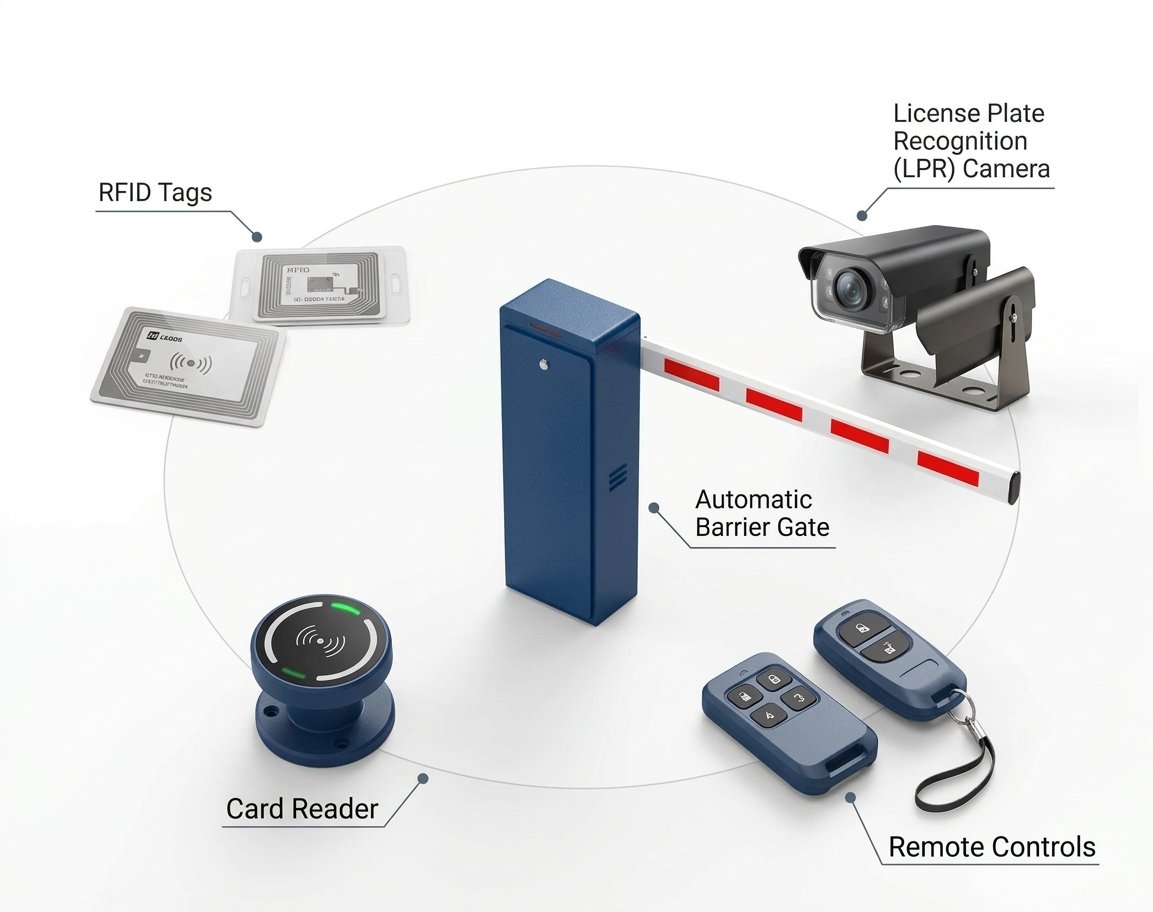
The access method should match the site's users and operating policy. BAROXON's product portfolio includes automatic RFID boom barriers and ALPR/LPR car plate recognition systems, alongside boom barrier gates and radar sensors. Depending on the project, access may be managed through RFID cards or tags, licence plate recognition, a guard-operated control, or a compatible third-party parking management platform.
- RFID access: Consider this for registered residents, staff, season-parking users or fleet vehicles.
- LPR/ANPR access: Consider this when the site wants to identify registered number plates and reduce reliance on physical cards or tickets.
- Guard or intercom control: May suit visitor entry or sites where staff approval is part of the operating process.
- Integrated parking management: May be appropriate when entry, exit, payment, visitor records and reporting need to work together.
Before committing, confirm the reader or camera, controller, software, network connection and existing access-control platform are compatible. Do not assume RFID or LPR functionality is included in every barrier model as standard; verify the exact bill of materials and integration scope. Where plate-based access is required, review the automatic LPR parking gate system against the site's workflow.
6. Check Weather Protection and Site Conditions
Singapore's hot, humid and rainy conditions make enclosure protection, drainage, corrosion resistance and installation quality important. Check the specified ingress-protection (IP) rating for the exact model, the housing material and coating, the foundation requirements and the location of electrical connections. An IP rating alone does not guarantee suitability for every exposed or coastal location.
If the entrance is exposed to wind or heavy rain, or is near the coast, ask the supplier to confirm the environmental limits and any additional installation measures required. Ensure the barrier's foundation and arm movement are suitable for the actual driveway layout.
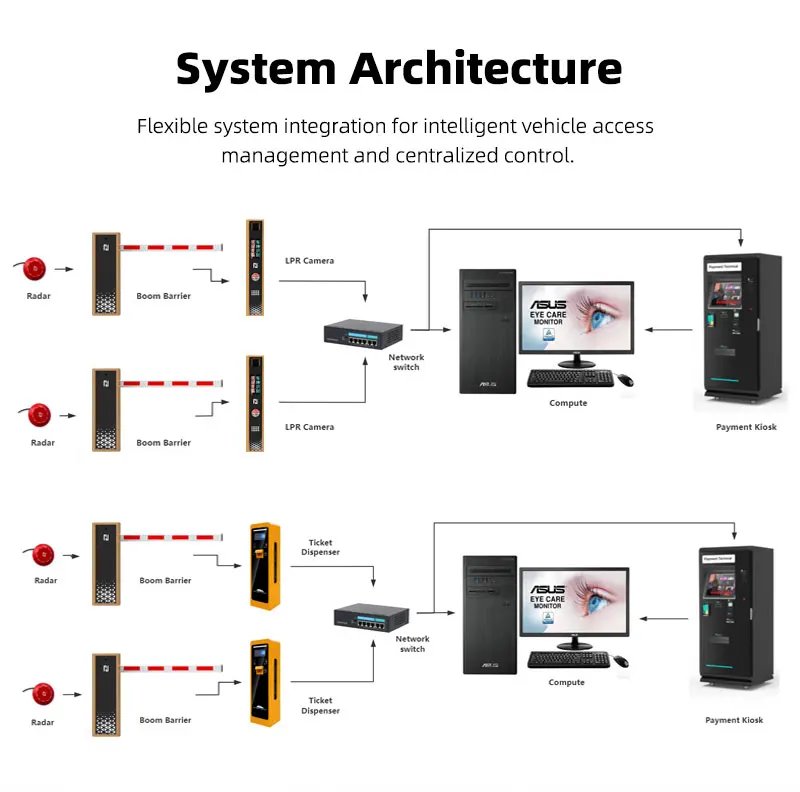
7. Verify Integration and Future Expansion
A barrier gate may need to communicate with existing parking software, payment terminals, visitor management, building access control or a security operations platform. BAROXON's site describes LPR/ALPR and barrier solutions with interfaces such as TCP/IP, Wiegand and RS485 on relevant products; interface availability varies by model, so request written confirmation for the exact equipment being quoted.
Ask who will configure the integration, provide the software licence, test data exchange and support the system after handover. If you may add lanes or new access methods later, discuss expansion capacity and the cost of future changes before purchase.
8. Compare Total Cost, Not Just the Purchase Price
The initial quotation is only one part of the project cost. Compare the barrier operator, boom arm, safety sensors, RFID readers or LPR cameras, controller, software, installation, civil works, commissioning, training, warranty and spare parts. A lower initial price may not be the best value if the equipment is poorly matched to traffic demand or difficult to maintain.
Ask for a written quotation that identifies the exact model, included accessories, arm length, motor and controller specification, supported interfaces, warranty terms, lead time and exclusions. For a multi-lane or multi-site project, request a consistent specification so different offers can be compared fairly.
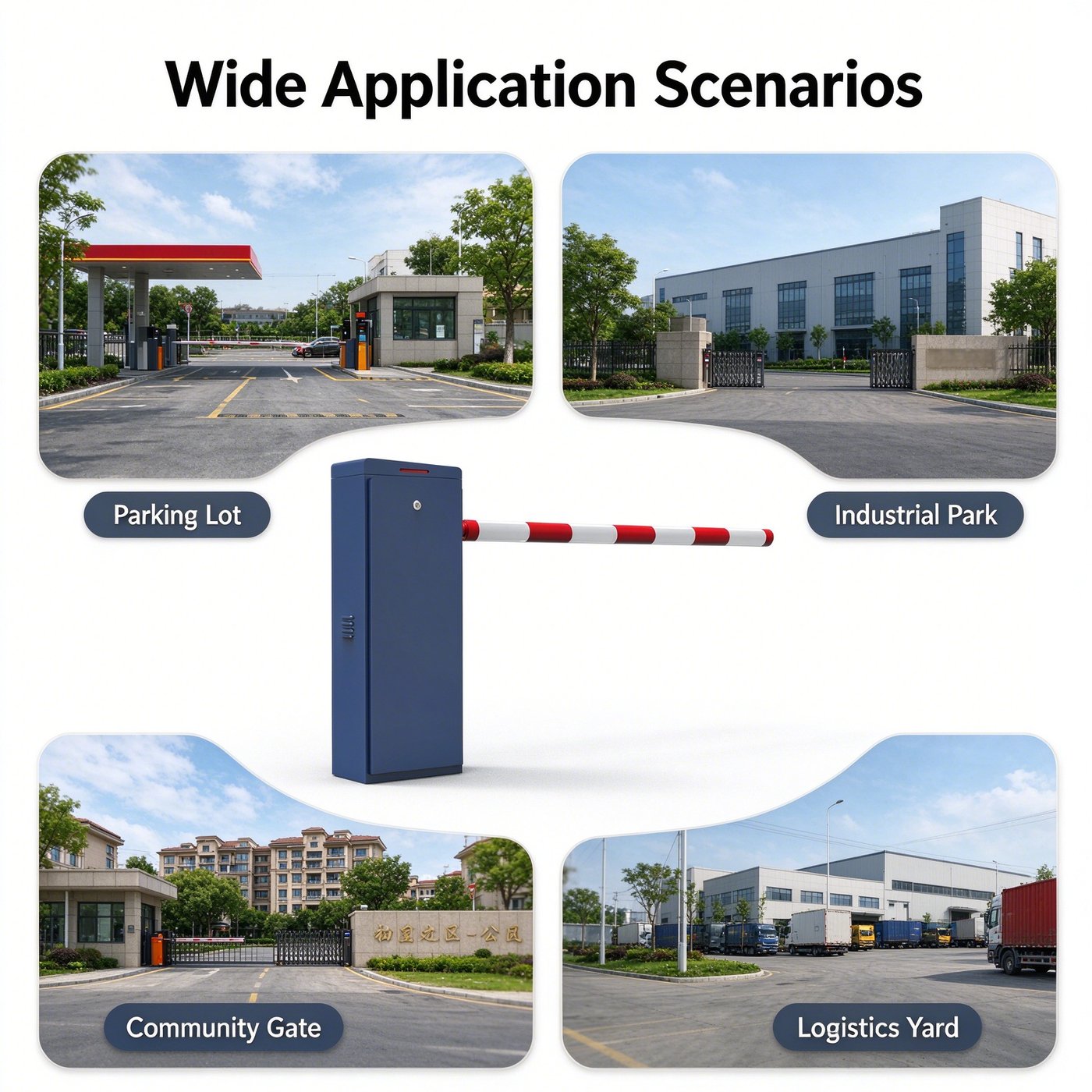
9. Match the Barrier to Common Singapore Site Types
| Site type | What to prioritise |
|---|---|
| Condominium or residential estate | Resident and visitor access, RFID/LPR compatibility, safe operation and maintenance support |
| Office building or commercial car park | Peak-hour throughput, season-parking workflows, payment/access integration |
| Shopping mall or public car park | High vehicle turnover, reliable detection, clear entry/exit logic and service support |
| Factory or logistics yard | Heavy-duty operation, truck-compatible layout, radar/loop detection and access records |
| Basement or low-clearance driveway | Folding-arm suitability, measured headroom and safe arm movement |
10. A Practical Pre-Purchase Checklist
Before requesting a final quotation, prepare the following information for the supplier:
- Site address and application type.
- Clear lane width, available headroom and photos of the entrance.
- Estimated normal and peak vehicle volume.
- Vehicle types, including any trucks or service vehicles.
- Required boom arm type and approximate length.
- Preferred access method: RFID, LPR/ANPR, guard control or a combination.
- Required safety devices and pedestrian arrangements.
- Existing parking software, access-control platform and available interfaces.
- Operating hours, duty-cycle expectations and maintenance arrangements.
- Required delivery date, warranty and after-sales support expectations.
Why Consider BAROXON for Your Parking Barrier Project?
BAROXON's Singapore website presents a BAROXON product range covering boom barrier gates, high-speed barriers, automatic RFID boom barriers, ALPR/LPR car plate systems, radar sensors and related access-control equipment. The company also describes solutions for residential estates, commercial car parks, industrial and logistics facilities, and transport-related sites. This breadth may help project teams assess a matched barrier and access-control configuration rather than selecting the barrier operator in isolation.
For an accurate recommendation, provide BAROXON with the site layout, traffic estimate, required arm length, access method and integration requirements. Ask for the proposed model's datasheet, wiring/interface details, safety-device list, installation requirements, warranty and a quotation that clearly states what is included. You can review the BAROXON Singapore website for the current product categories before requesting a quote.
Frequently Asked Questions
What is the best automatic parking barrier for a condominium in Singapore?
The best choice depends on resident and visitor traffic, lane width, operating hours and the access method used by the management team. RFID may suit registered users, while LPR/ANPR may suit sites that want number-plate-based access. Confirm compatibility, safety devices and maintenance support before selecting a model.
Should I choose a high-speed boom gate?
Consider a high-speed model if vehicle demand and queueing justify it. Compare the complete operating cycle, arm length, safety system and rated duty cycle, not just the advertised opening time. A site assessment can help establish the required performance.
Is a folding-arm barrier suitable for a basement car park?
It can be suitable where overhead clearance is restricted, but the actual folding path and dimensions must be checked against the site. Ask the supplier to confirm the model's required headroom and safe operating envelope.
Can an automatic parking barrier integrate with RFID or LPR?
BAROXON lists RFID boom barriers and ALPR/LPR products in its portfolio. Integration depends on the exact barrier controller, reader or camera, software and interface requirements. Obtain written confirmation for the complete proposed configuration before ordering.
What information should I give a barrier gate supplier?
Provide the lane width, overhead clearance, traffic volume, vehicle types, operating hours, preferred access method, required safety devices and any existing parking or access-control system. Site photos and a simple layout drawing can help the supplier recommend a suitable configuration.
Conclusion
The right automatic parking barrier for your site is the one that fits the real operating conditions: vehicle volume, driveway geometry, arm type, safety requirements, access-control method, environmental exposure and lifecycle cost. For Singapore projects, compare the complete system and its support arrangements—not just the barrier price or opening speed. A site-specific specification and written compatibility confirmation will help reduce installation surprises and support reliable long-term operation.
Latest News
Baroxon® | Leading Boom Barrier Manufacturer
Advanced Security Access Control and Intelligent Parking Solutions.
Company Strength
Adequate Inventory
Fast Shipping
Our Products
CONTACT US
Address: No. 2 Wanshou Road, International Innovation Industrial Park, Jinan, Shandong, China




© COPYRIGHT 2025 Baroxon® | Leading Boom Barrier Manufacturer


Contact Us
Professional Manufacturer of Vehicle Barriers & License Plate Recognition Cameras,Smart Parking Access Control Solutions for Global Clients,Reliable Barrier Gates + LPR Systems, Customized to Your Project,From residential communities, commercial shopping malls, industrial parks to highway toll stations, our matched barrier & LPR sets can realize automatic license plate identification, automatic gate lifting, real-time access records, automatic charging and remote management.