
What to Consider When Buying a Heavy-Duty Parking Barrier
Release time:
2026-11-03
A heavy-duty parking barrier is designed for vehicle entrances where the boom gate may operate frequently throughout the day. In Singapore, this can include condominium car parks, commercial buildings, industrial premises, logistics facilities and other busy access points. The right choice depends on more than motor power: traffic volume, boom length, safety devices, weather exposure, access-control integration and maintenance arrangements all affect long-term performance.
BAROXON's range includes boom barriers, high-speed barrier gates, RFID access options, LPR/ANPR parking systems and radar sensors. Before selecting a model, define the operating requirements of the site and confirm the exact specifications and interfaces for the proposed configuration. The full BAROXON boom barrier and parking gate product range is a useful starting point for comparison.
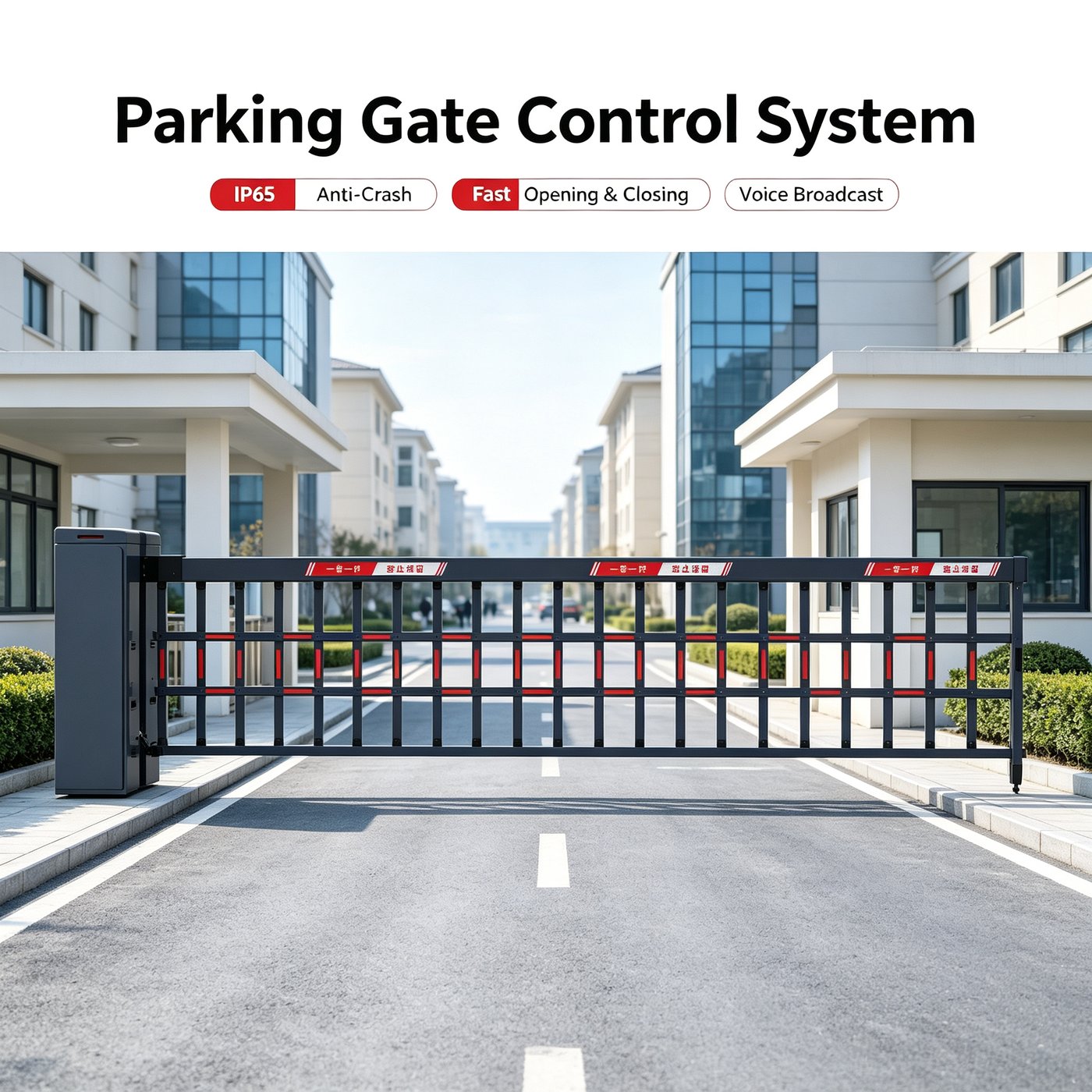
1. Start with Traffic Volume and Duty Cycle
The first question is how often the barrier will open and close during normal operation and at peak periods. A barrier at a small staff car park may have very different demands from one serving a busy condominium entrance or a logistics depot. Estimate daily vehicle movements, peak-hour arrival patterns, queue length and whether the lane operates continuously or in bursts.
Check the manufacturer's stated duty cycle and endurance data for the exact model. BAROXON's heavy-duty product information describes brushless DC motor configurations and high-cycle operation, including model-specific endurance claims. Treat these as product-specific figures, not a guarantee that every model or installation will deliver the same result. Ask for the applicable test conditions and confirm that the quoted model suits the expected number of cycles. For sites that need a proven high-cycle unit, review the heavy-duty automatic vehicle barrier gate for Singapore sites.
2. Choose the Correct Boom Length and Arm Type
Boom length must match the lane width and the required clear opening. Measure the entrance accurately and allow for kerbs, islands, posts, pedestrian routes, turning movements and any nearby structures. Do not select a longer arm than necessary: a longer boom can change the operating load and may affect opening time, balancing and the model that is suitable for the site.
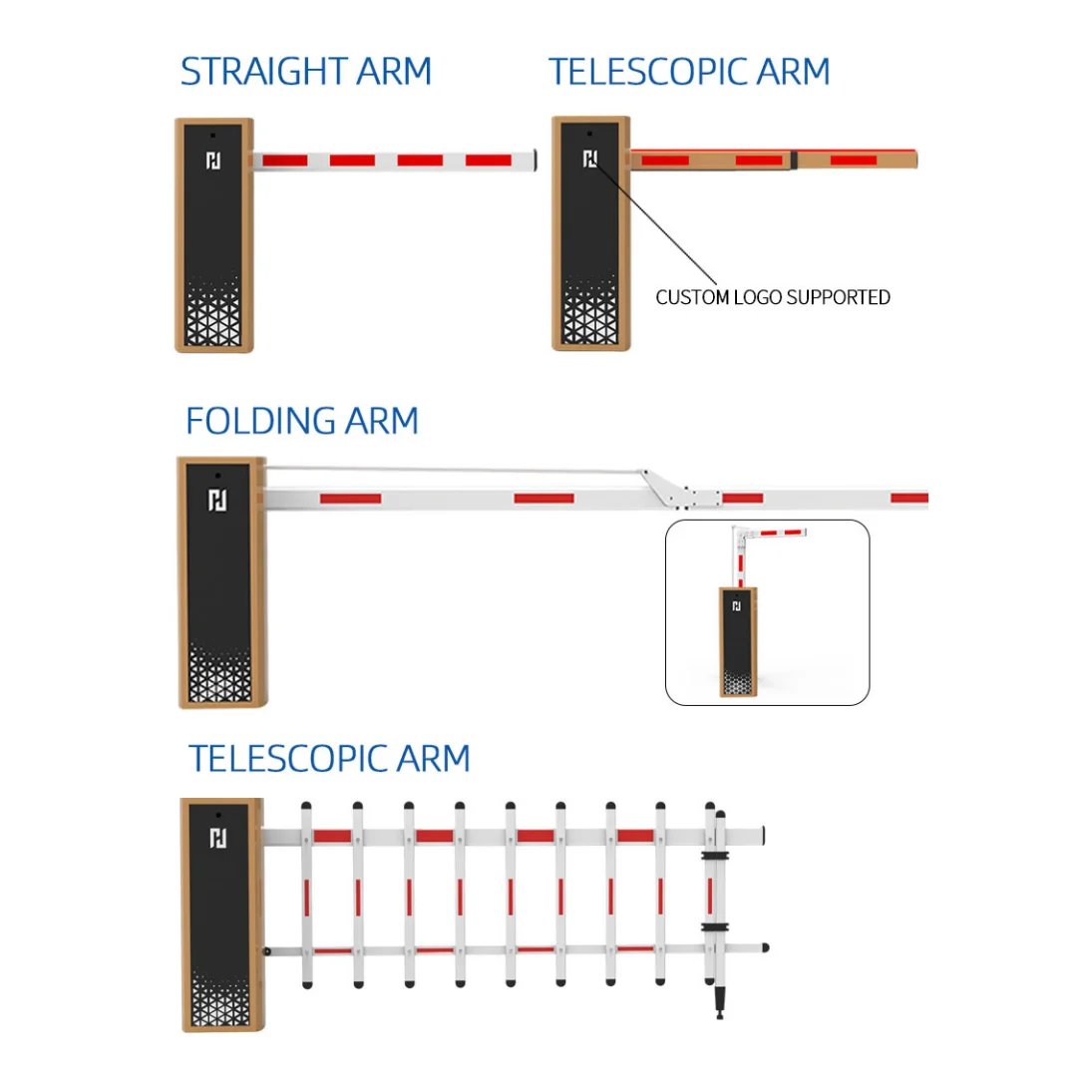
BAROXON lists straight, folding and fence-style boom options, with arm lengths and configurations varying by model. A straight arm may suit a conventional open lane; a folding arm can be useful where ceiling clearance is limited, such as some basement car parks; a fence-style arm may be considered where the access design calls for a more visually enclosed barrier. Confirm the available arm types, maximum length and compatibility with the selected operator before ordering.
3. Compare Opening Speed with Real Traffic Flow
A fast barrier can help reduce waiting time, but opening speed alone does not determine throughput. Vehicle recognition, driver response, safe following distance, payment processing and the closing sequence also affect how quickly vehicles can pass. A site with slow credential verification may not benefit much from a faster motor until the whole entry workflow is improved.
BAROXON publishes model-specific opening-speed figures, including a stated 1.1–1.5-second 90-degree lift for a particular configuration tested at 25°C with a 3 m aluminium boom. This should not be assumed for every arm length, motor or operating condition. Ask the supplier to quote the expected opening and closing performance for the exact arm and controller configuration being offered.
4. Check the Motor, Transmission and Mechanical Construction
For a high-use entrance, review the motor type, transmission design, housing construction, service access and availability of replacement parts. BAROXON product information lists brushless DC, AC and servo motor options across different configurations. The best choice depends on the model, required operating frequency, boom dimensions, control features and the maintenance capability available at the site.
Ask for the product datasheet, installation requirements, expected maintenance intervals and warranty terms. Clarify which components are wear items, how faults are diagnosed and whether spare parts can be supplied within a practical timeframe. Avoid relying on broad terms such as "industrial grade" unless they are supported by relevant specifications and service commitments.
5. Consider Singapore's Outdoor Conditions
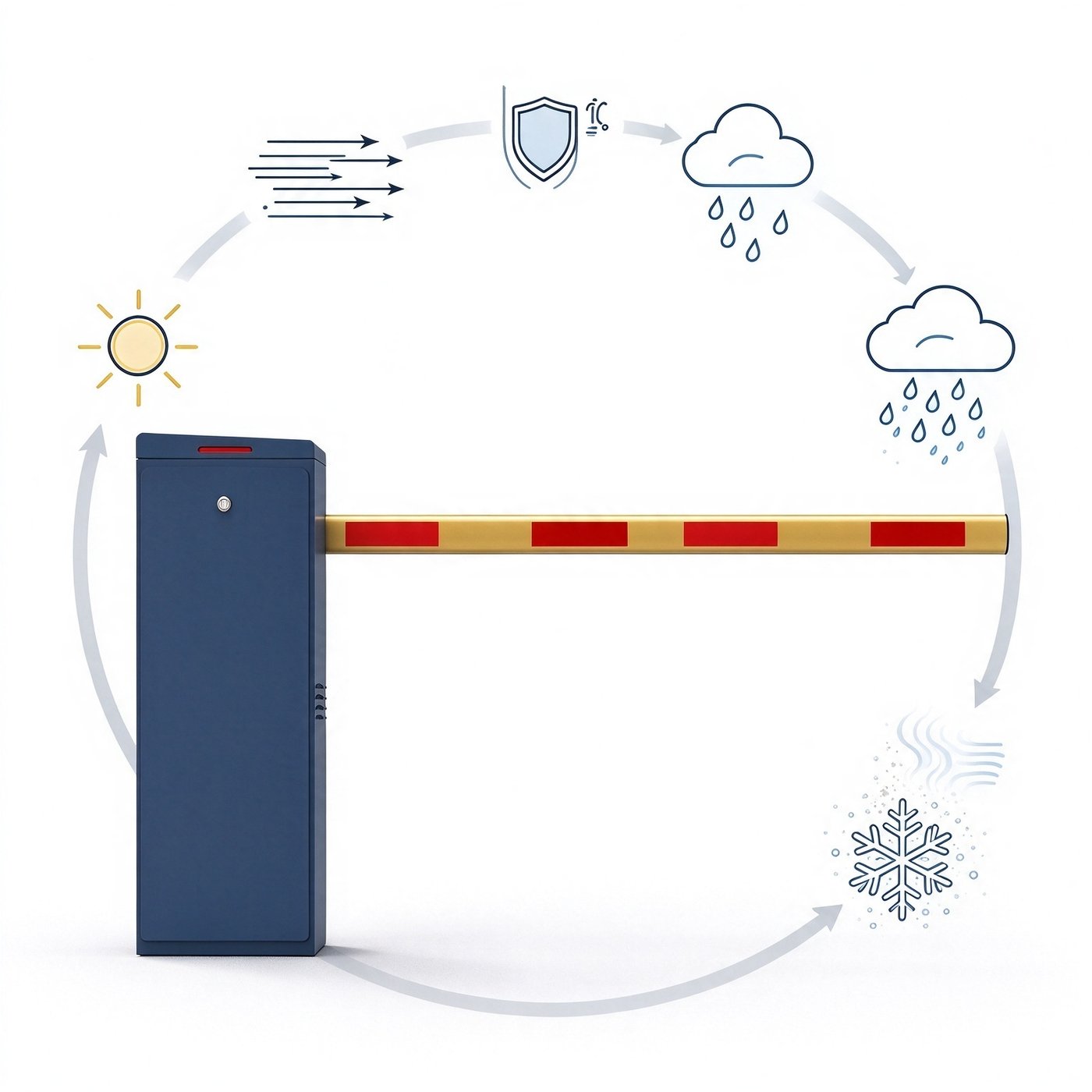
Outdoor parking barriers may be exposed to heavy rain, humidity, heat, dust and frequent day-to-night temperature changes. Review the enclosure's ingress-protection rating and the manufacturer's installation guidance for the actual environment. The protection rating should match the expected exposure; it does not mean the equipment can be submerged or installed without suitable cable glands, drainage and mounting practices.
BAROXON lists different protection classes across product configurations, including IP54, IP65 and IP66 on some product specifications. Do not assume that every model has the highest rating. Confirm the rating for the exact unit, the installation location and any external readers or sensors, which may have their own separate protection requirements. A high-performance outdoor parking barrier gate may be a better fit for exposed entrances.
6. Make Safety Devices Part of the Specification
A heavy-duty barrier must be selected as part of a safe lane system, not as an isolated motorised arm. Discuss vehicle detection, anti-collision logic, obstruction response, photocells or radar where suitable, manual release and what happens during a power failure. The correct arrangement depends on the lane geometry, traffic pattern, pedestrian movement and the barrier model.
Ask the installer to explain the safety sequence and demonstrate it during commissioning. Test normal passage, a vehicle remaining in the detection zone, failed authorisation, power interruption and manual operation. Never assume that a safety feature is included merely because it appears in a general product family description; confirm the accessories and functions included in the quotation.
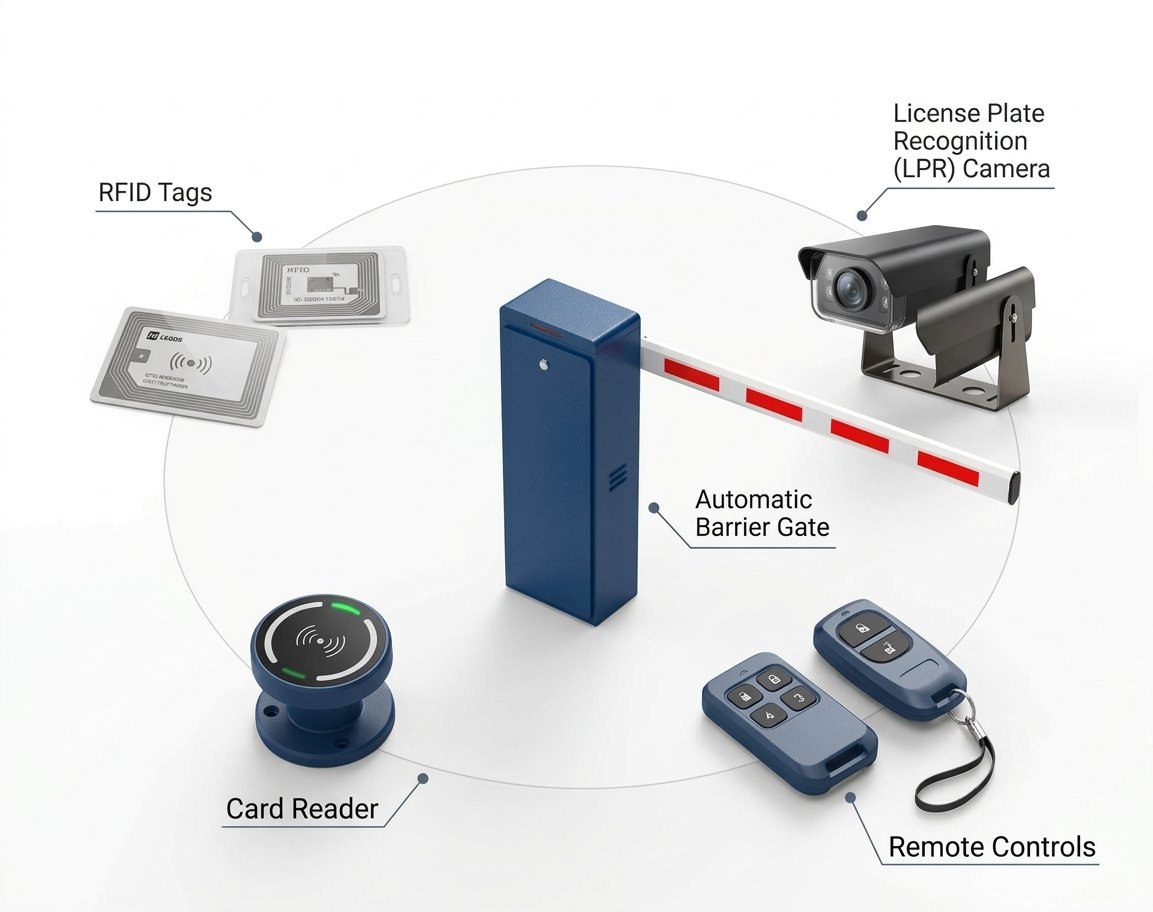
7. Confirm Compatibility with RFID, LPR/ANPR and Parking Software
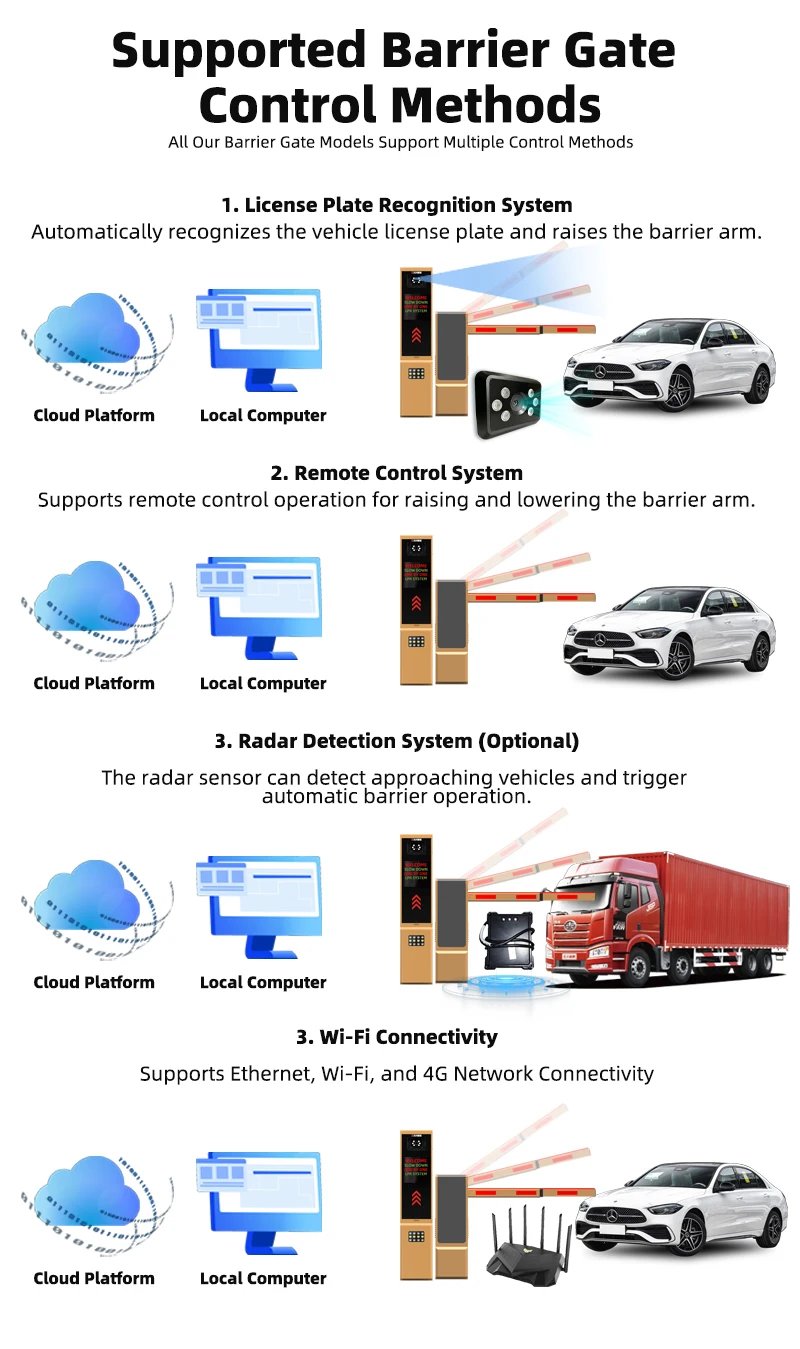
A heavy-duty boom barrier may be used with RFID cards or tags, LPR/ANPR number-plate recognition, ticketing, payment systems or a combination of access methods. BAROXON's product range includes automatic RFID boom barriers, LPR/ANPR systems and radar sensors. Decide how residents, staff, visitors, delivery vehicles and other authorised users will be handled before selecting the reader and software configuration.
Check the interfaces supported by the exact configuration. BAROXON product information references interfaces such as TCP/IP, Wiegand and RS485 for compatible systems, but compatibility is not automatic across all devices. Confirm the required protocols, input/output signals, software licences, interface modules, network conditions and supplier responsibilities in writing. An automatic RFID boom barrier and an LPR/ANPR parking barrier system should each be checked against the same integration plan.
8. Plan for Maintenance, Support and Downtime
A low purchase price may not represent the lowest lifetime cost if the barrier is difficult to service or spare parts are slow to obtain. Ask about preventive maintenance, fault-response arrangements, remote technical support, spare-parts availability, warranty exclusions and the recommended inspection schedule. For a critical entrance, also plan how vehicles will be managed if the barrier is unavailable.
Ask who is responsible for the barrier, access reader, camera, network, parking software and payment integration. A written responsibility matrix can prevent delays when a fault spans multiple suppliers. Record the model and serial number, installation settings, wiring diagrams and commissioning results so that future troubleshooting is more efficient.
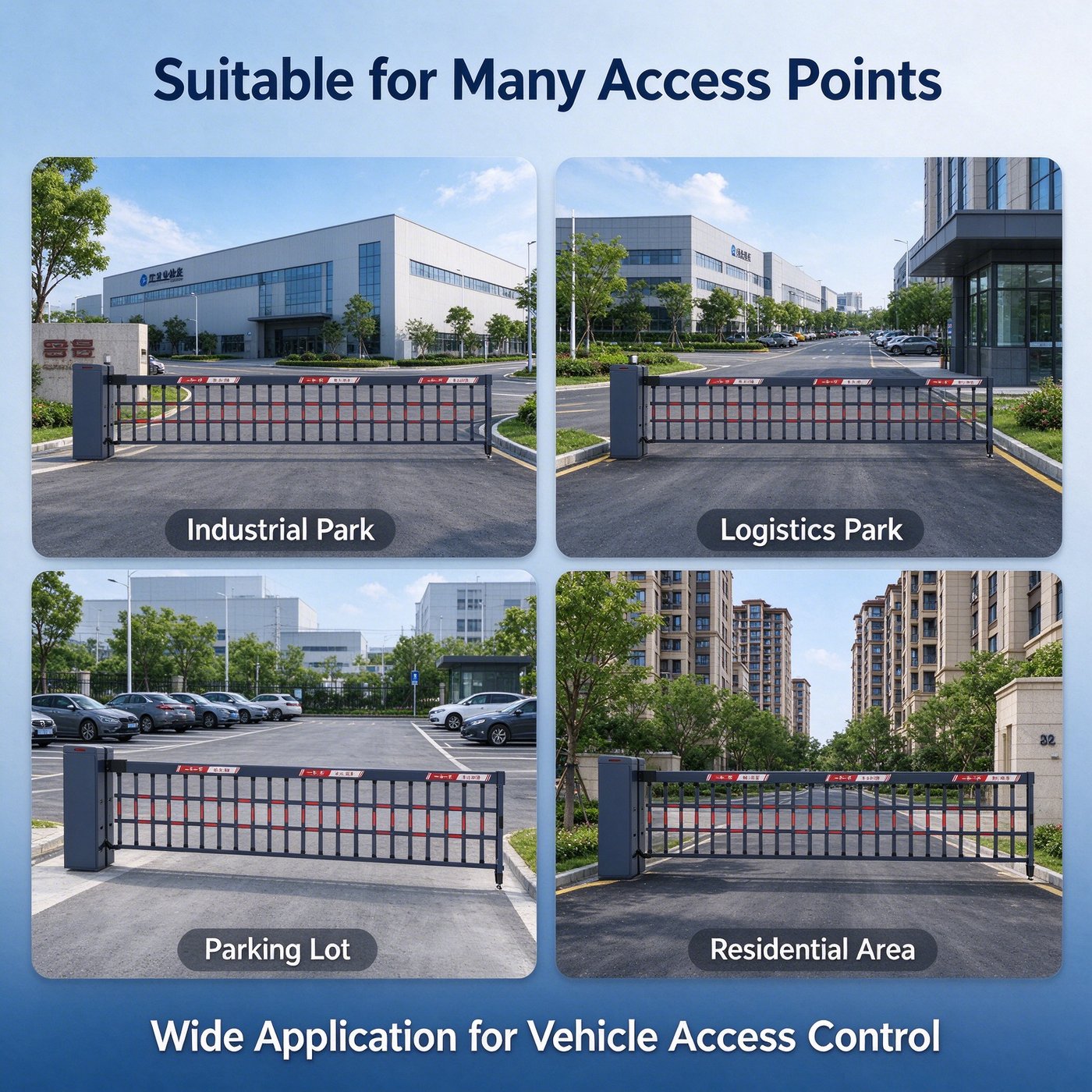
9. Match the Barrier to the Site
- Condominium and residential car parks: Prioritise dependable daily operation, resident and visitor access workflows, safety and manageable maintenance.
- Commercial buildings and shopping centres: Consider peak-hour queueing, payment or validation integration, and the mix of tenant, staff and visitor vehicles.
- Industrial and logistics sites: Focus on frequent cycles, vehicle types, lane width, robust installation and clear procedures for abnormal events.
- Basement car parks: Check headroom, boom-arm clearance, turning space and whether a folding arm is appropriate.
- Multi-lane or high-throughput entrances: Assess lane-by-lane controls, sensor placement, access-system coordination and how queues will be prevented from spilling into surrounding roads.
10. Questions to Ask Before You Buy
- What is the recommended model for our expected daily and peak-hour traffic?
- Which boom lengths and arm types are supported by the quoted model?
- What duty-cycle and endurance data apply to this exact configuration?
- What opening time is expected with our required boom length?
- Which safety devices are included, and which are optional?
- What ingress-protection rating applies to the barrier housing and external devices?
- Can the system integrate with our current RFID, LPR/ANPR, payment and parking software?
- What happens during a power failure, network outage or access-system fault?
- What are the warranty, maintenance, spare-parts and support arrangements?
- What drawings, site checks and commissioning tests are required before handover?
Frequently Asked Questions
What makes a parking barrier "heavy-duty"?
The term generally refers to equipment intended for frequent or demanding operation, but the label alone is not a performance standard. Compare the actual duty-cycle rating, endurance evidence, motor and arm configuration, safety features, environmental protection and service support for the exact model.
Is a faster boom barrier always better?
No. Faster operation can help with queues, but the complete vehicle cycle includes detection, credential verification, driver response and safe closing. Choose a speed that matches the lane design and access workflow, and confirm it for the exact arm configuration.
Which protection rating should I choose for an outdoor car park in Singapore?
Choose a rating based on the real exposure and the manufacturer's installation guidance. Confirm the rating of the exact barrier model and separately check cameras, readers, sensors and junction boxes. A protection rating does not replace correct installation, drainage and maintenance.
Can a heavy-duty barrier work with LPR/ANPR?
It may, provided the barrier controller, camera, recognition software and parking platform have compatible interfaces and are correctly configured. Confirm the exact protocol, required hardware and integration scope with the suppliers before purchase.
How can I reduce the lifetime cost of a heavy-duty barrier?
Choose a model matched to actual traffic, avoid unnecessary arm length or features, specify safety and integration requirements clearly, and plan preventive maintenance. Compare warranty coverage, spare-parts lead time and support as well as the initial purchase price.
Conclusion
Buying a heavy-duty parking barrier for a Singapore site starts with understanding the real traffic pattern and operating environment. Check the duty cycle, boom length, motor configuration, opening performance, weather protection, safety devices, system interfaces and after-sales support. Then ask the supplier to confirm every critical specification for the exact model and installation before placing the order.
Planning a high-traffic car park or industrial entrance? Share your lane width, expected vehicle movements, boom length and access-control requirements with BAROXON Singapore parking barrier solutions to discuss a suitable heavy-duty barrier configuration.
Latest News
Baroxon® | Leading Boom Barrier Manufacturer
Advanced Security Access Control and Intelligent Parking Solutions.
Company Strength
Adequate Inventory
Fast Shipping
Our Products
CONTACT US
Address: No. 2 Wanshou Road, International Innovation Industrial Park, Jinan, Shandong, China




© COPYRIGHT 2025 Baroxon® | Leading Boom Barrier Manufacturer


Contact Us
Professional Manufacturer of Vehicle Barriers & License Plate Recognition Cameras,Smart Parking Access Control Solutions for Global Clients,Reliable Barrier Gates + LPR Systems, Customized to Your Project,From residential communities, commercial shopping malls, industrial parks to highway toll stations, our matched barrier & LPR sets can realize automatic license plate identification, automatic gate lifting, real-time access records, automatic charging and remote management.