
How to Choose a Parking Barrier for an Underground Car Park
Release time:
2026-11-03
An underground car park has different requirements from an open-air parking area. Low headroom, sloping ramps, tight turning space, artificial lighting, humid conditions and peak-hour queues all affect barrier selection. For condominiums, commercial buildings and mixed-use developments in Singapore, the right boom barrier should fit the site layout and work reliably with the car park's access-control system.
This guide covers headroom, boom-arm design, traffic frequency, vehicle detection, access-control integration, installation and maintenance.
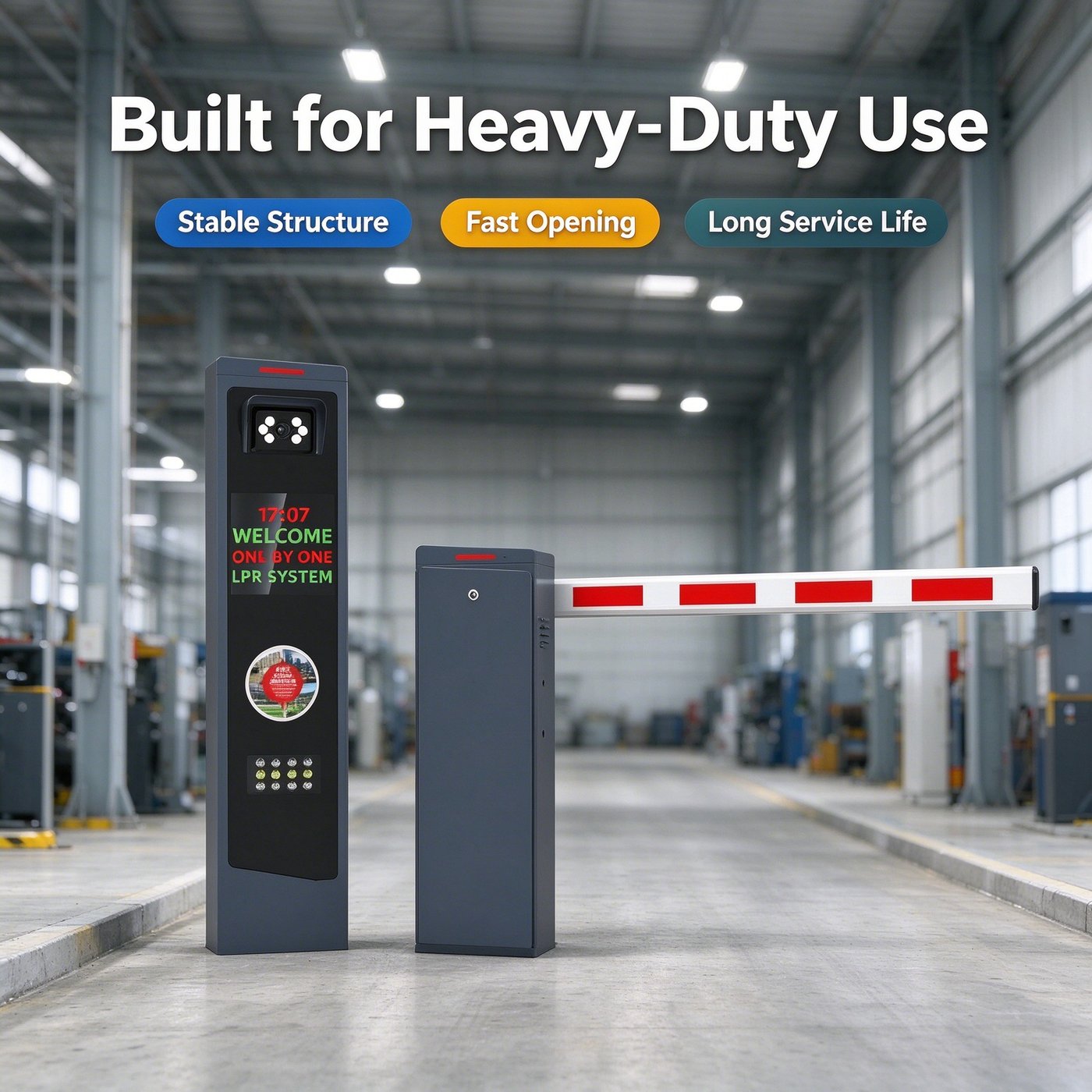
1. Measure Headroom and Ramp Geometry
Check the actual clearance at the entrance, including beams, pipes, sprinkler systems, signs, lighting fixtures and sloping soffits. Measure the lane and confirm the full travel path of the boom arm when it opens. Do not rely only on nominal ceiling height shown on building drawings.
For a low-ceiling entrance or restricted ramp, ask whether a folding-arm barrier or another configuration is available for the selected model. A folding arm may reduce the vertical space required, but suitability depends on the exact geometry, arm length and barrier model. Request a layout drawing or site assessment before confirming the configuration.
Consider the approach angle and turning radius as well. A barrier placed too close to a bend or ramp transition may restrict visibility or create a queue that blocks the driveway. Ensure vehicles can stop safely without obstructing pedestrian routes or emergency access.
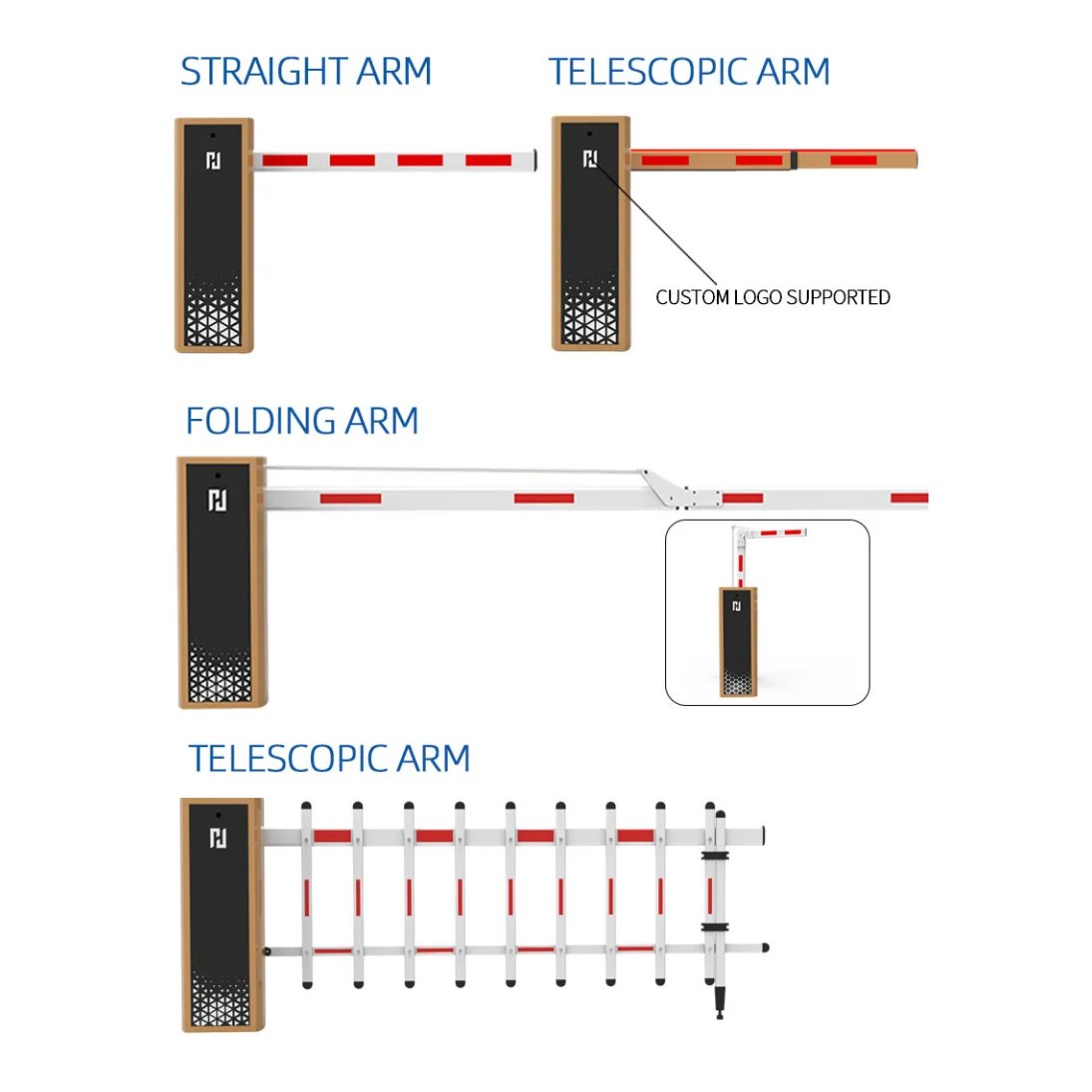
2. Select a Suitable Boom-Arm Type
The boom arm must suit lane width, available clearance and traffic flow. BAROXON offers automatic boom barrier gates for car parks and configurable solutions; confirm the exact options available for the proposed model.
- Straight arm: Often suitable where there is sufficient vertical clearance and a straightforward vehicle lane.
- Folding arm: Worth assessing where ceilings or overhead services limit lifting space.
- Fence-style or specialised arm: May suit particular access-control layouts, but is not automatically suitable for every basement.
Ask the supplier to confirm supported arm length, balancing method, opening time and compatibility with the barrier body. A longer or heavier arm may change performance and must be matched to the correct mechanism.
3. Match the Barrier to Peak-Hour Traffic
Estimate the number of vehicles passing during morning and evening peaks, whether the car park serves residents or visitors, and whether entry and exit lanes are separate. A condominium may have a different traffic pattern from a shopping centre, office tower or mixed-use development.
For busy entrances, check the model's rated duty cycle, motor type, opening speed and endurance data. BAROXON lists high-speed and brushless DC barrier options for high-frequency applications. Published figures are model- and test-condition-specific, so request the datasheet for the exact configuration rather than assuming every model has the same performance. For demanding traffic, a commercial barrier gate system for heavy traffic may be more appropriate.
A fast barrier alone does not guarantee short queues. Reader response, LPR camera performance, payment processing, controller response, vehicle spacing and barrier movement all affect throughput. Plan sufficient waiting space so a queue does not obstruct the ramp or public road.
4. Prioritise Vehicle and Pedestrian Safety
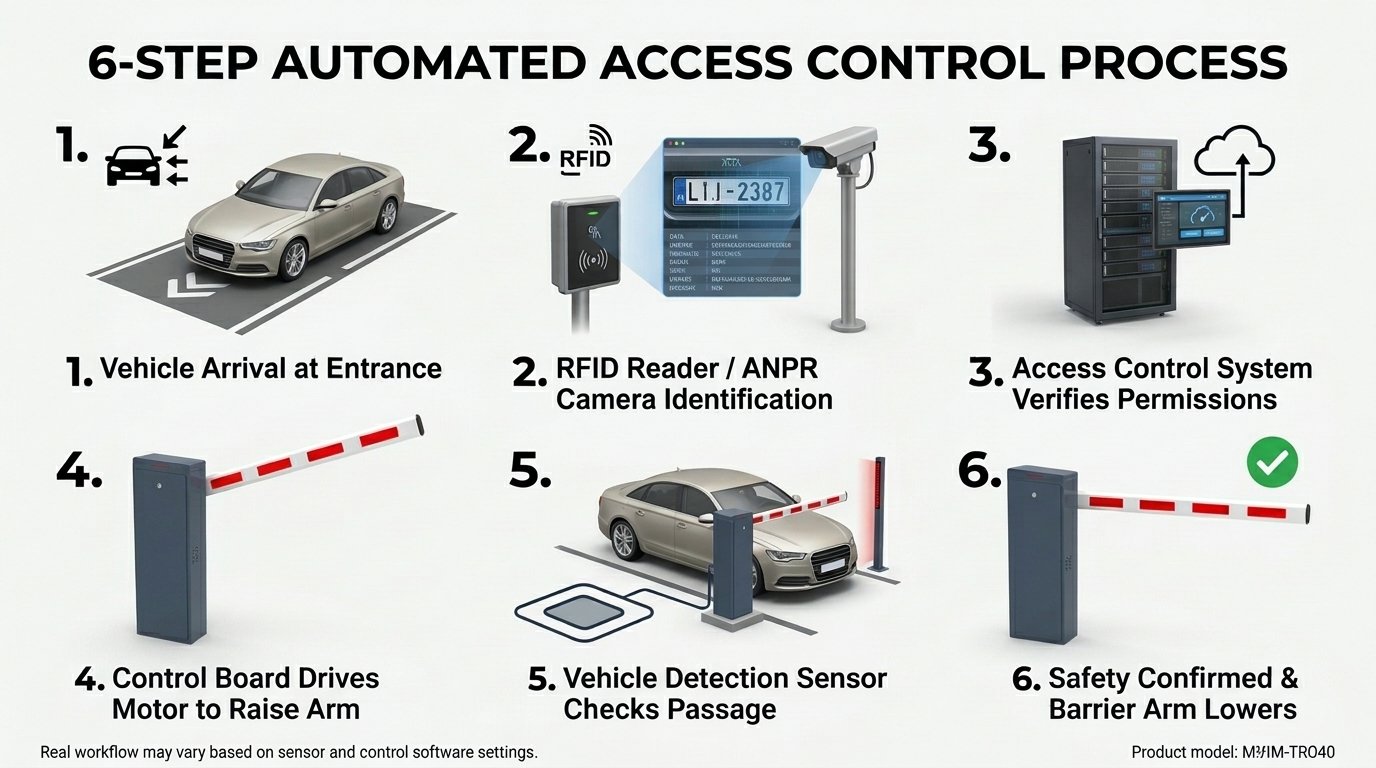
Underground car parks may have pedestrians crossing near the entrance, motorcycles alongside cars and vehicles stopping on a slope. Ask which safety devices are supported, such as vehicle-detection radar, loop detectors, photocells or compatible presence sensors. Confirm how the controller responds when a vehicle remains beneath the boom or a sensor detects an obstruction.
Do not rely on the barrier arm alone to prevent collisions. Specify suitable detection coverage, clear road markings, warning signs and a safe stopping position. The final design should be checked against the site risk assessment and applicable local requirements.
For sloping approaches, test sensor performance using the actual vehicle path and installation position. During commissioning, check tailgating, reversing vehicles, motorcycles and pedestrians near the lane.
5. Check LPR, RFID and Access-Control Compatibility
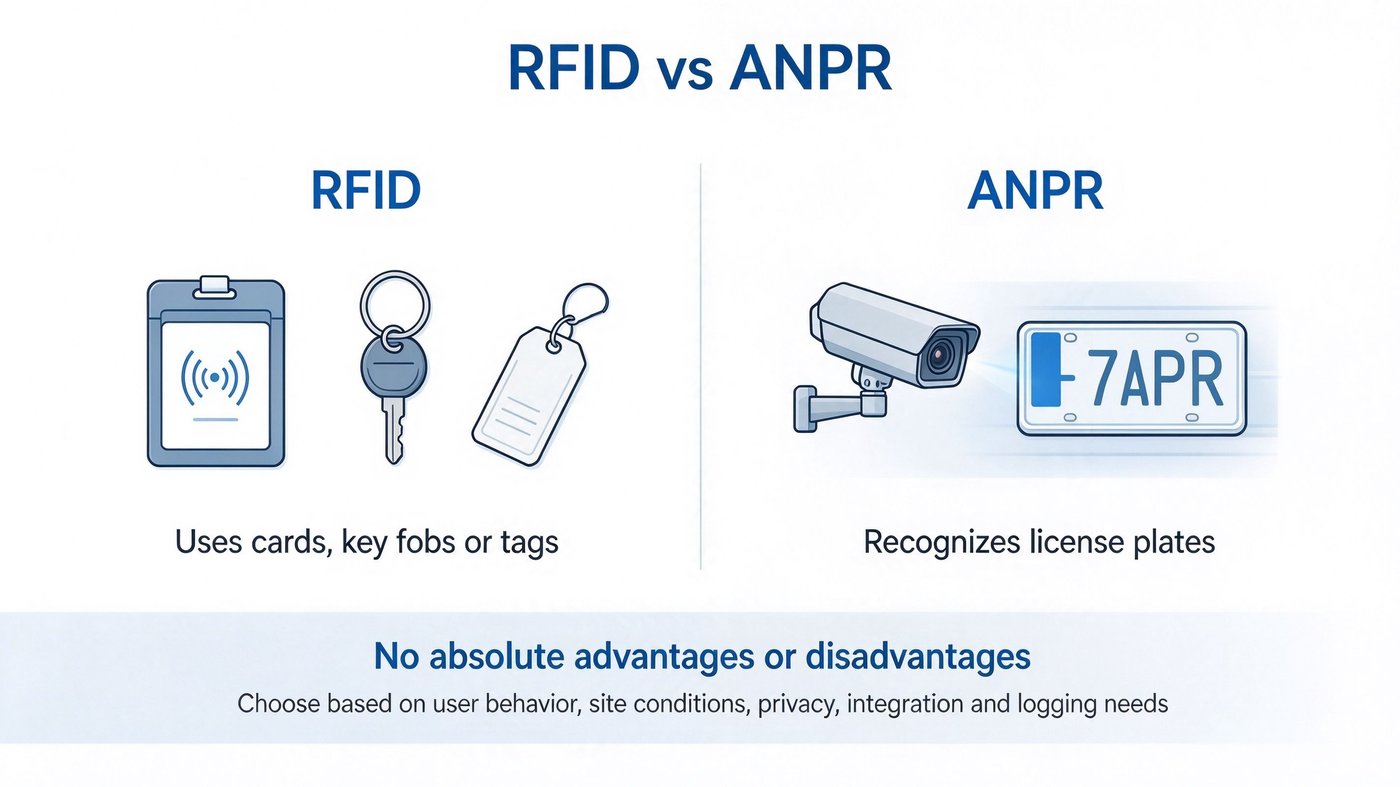
Many Singapore car parks use vehicle registration recognition, RFID credentials, access cards, intercoms or parking-management software. Map the existing equipment and determine how the barrier will receive an open command, verify a vehicle and record access events.
BAROXON's wider range includes ALPR/LPR car plate systems, automatic RFID boom barriers and radar sensors. Its product information lists interfaces such as TCP/IP, Wiegand and RS485 on relevant configurations. Confirm the interface and protocol supported by the exact model, and obtain written confirmation of compatibility with the existing parking controller.
For LPR access, assess camera placement, lighting, plate visibility, stopping distance and network reliability. Underground lighting can vary between ramps and basement zones, so request a site test or representative demonstration instead of relying only on a generic recognition-rate claim. An LPR car plate recognition and parking management system should be reviewed against the basement's actual lighting and layout.
Clarify fallback procedures for unreadable plates, network outages, power failure and visitor access. Define manual override, emergency operation and event-record responsibilities.
6. Consider Humidity and Basement Conditions
Singapore's climate is humid, and underground car parks may experience condensation, dust, cleaning water and limited airflow. Review the enclosure's ingress-protection rating, corrosion protection, ventilation requirements and permitted operating environment. An IP rating does not automatically mean the unit can be submerged or installed in any wet location.
BAROXON lists IP54 protection for certain barrier models. Treat this as model-specific and check the datasheet for the exact unit. If the installation is exposed to frequent wash-down, water jets, flooding risk or corrosive cleaning chemicals, ask the supplier to confirm suitability and any additional protection required.
Plan maintenance access too. Authorised technicians should be able to reach the housing without unnecessarily blocking traffic. Confirm where the control cabinet, isolator, cabling and network equipment can be installed and serviced safely.
7. Review Power and Installation Constraints
Confirm the available power supply, cable routes, mounting foundation, drainage, floor condition and nearby services. Underground car parks may have concrete columns, overhead pipework and restricted access for drilling or lifting equipment. Coordinate the layout with the building manager and relevant electrical and security-system contractors.
Ask for installation dimensions, foundation requirements, wiring diagrams, commissioning procedures and accessory lists. Verify maintenance access and whether the boom can be removed safely when required.
Do not finalise the purchase until the supplier has reviewed the site dimensions and confirmed the arm type, length, opening direction, power requirements and interfaces in writing.
8. Compare Total Cost of Ownership
A lower initial price may not be better value if the barrier is unsuitable for traffic volume, difficult to maintain or incompatible with existing software. Compare equipment, installation, safety sensors, access-control integration, commissioning, training, spare parts and expected maintenance as one project cost.
Ask about warranty coverage, response times, replacement-part availability and remote technical support. Establish how the entrance will operate if the barrier is out of service and who arranges repairs.
9. Underground Car Park Barrier Selection Checklist
- Measure headroom, lane width, ramp slope and turning clearance.
- Confirm whether a straight or folding arm suits the clearance.
- Estimate peak traffic and verify duty-cycle and opening-speed specifications.
- Specify vehicle detection and obstruction-safety devices.
- Confirm compatibility with LPR/ANPR, RFID, access cards and parking software.
- Review enclosure protection and environmental suitability.
- Confirm power, cabling, foundation, maintenance access and emergency procedures.
- Obtain the exact datasheet, layout drawing, quotation and written compatibility confirmation.
10. Why Consider BAROXON?
BAROXON's product portfolio includes boom barrier gates, high-speed barriers, LPR/ALPR car plate systems, automatic RFID boom barriers and radar sensors. This range can help project teams assess a coordinated vehicle-access solution instead of treating the barrier as an isolated component. Browse the BAROXON product centre to compare categories.
The right configuration depends on the site. Share entrance dimensions, available headroom, traffic estimates, access-control equipment and preferred operating method with the supplier. Request a model recommendation and verify all performance and environmental specifications against the model-specific datasheet. You can also review the BAROXON Singapore website for current product information.
Frequently Asked Questions
What type of parking barrier is best for an underground car park?
There is no single best type for every basement. A straight arm may suit an entrance with sufficient headroom, while a folding arm may be worth assessing where overhead clearance is restricted. The choice depends on measured site dimensions and the selected model.
Can a boom barrier be installed on a sloping ramp?
It may be possible, but the foundation, barrier position, vehicle stopping area, sensor coverage and drainage must be assessed. Have the installer review the ramp and test safety logic during commissioning.
Can BAROXON barriers work with LPR or RFID?
BAROXON offers LPR/ALPR systems and automatic RFID boom barrier options. Compatibility with a particular controller or software depends on the model, interfaces and protocol; confirm before ordering.
Is IP54 enough for an underground car park?
It depends on actual exposure. IP54 may suit some environments, but it does not mean the equipment can withstand flooding or high-pressure wash-down. Check the exact model and site cleaning and drainage conditions.
What should I provide when requesting a quotation?
Provide lane width, headroom, ramp profile, peak-hour traffic estimate, preferred arm type, power availability, existing LPR/RFID/access-control equipment and any maintenance or emergency-operation requirements.
Call to Action
Planning a new or upgraded underground car park entrance in Singapore? Contact BAROXON to discuss site dimensions, boom-arm options, traffic requirements and integration with your existing LPR, RFID or parking-management system. Request a model-specific datasheet and layout recommendation before confirming the specification.
Latest News
Baroxon® | Leading Boom Barrier Manufacturer
Advanced Security Access Control and Intelligent Parking Solutions.
Company Strength
Adequate Inventory
Fast Shipping
Our Products
CONTACT US
Address: No. 2 Wanshou Road, International Innovation Industrial Park, Jinan, Shandong, China




© COPYRIGHT 2025 Baroxon® | Leading Boom Barrier Manufacturer


Contact Us
Professional Manufacturer of Vehicle Barriers & License Plate Recognition Cameras,Smart Parking Access Control Solutions for Global Clients,Reliable Barrier Gates + LPR Systems, Customized to Your Project,From residential communities, commercial shopping malls, industrial parks to highway toll stations, our matched barrier & LPR sets can realize automatic license plate identification, automatic gate lifting, real-time access records, automatic charging and remote management.