
How RFID Parking Barriers Improve Vehicle Access Management in Singapore
Release time:
2026-11-03
RFID parking barriers combine an automatic boom barrier with radio-frequency identification (RFID) technology to manage authorised vehicle entry and exit. A driver uses an approved RFID card, tag or compatible transponder; the reader checks the credential and sends an access signal to the barrier controller. When the system grants permission, the boom arm opens so the vehicle can pass. For Singapore properties, this approach can make regular access more consistent while helping operators manage who is allowed to use each car park entrance.
In Singapore, RFID access control can be relevant to condominiums, office buildings, commercial car parks, industrial facilities and fleet entrances where the same authorised vehicles return regularly. The most effective design depends on the property's traffic flow, user groups, existing parking software, lane layout and safety requirements. An RFID reader is only one part of the solution: the reader, credential database, controller, barrier, sensors and operating procedures need to work together.
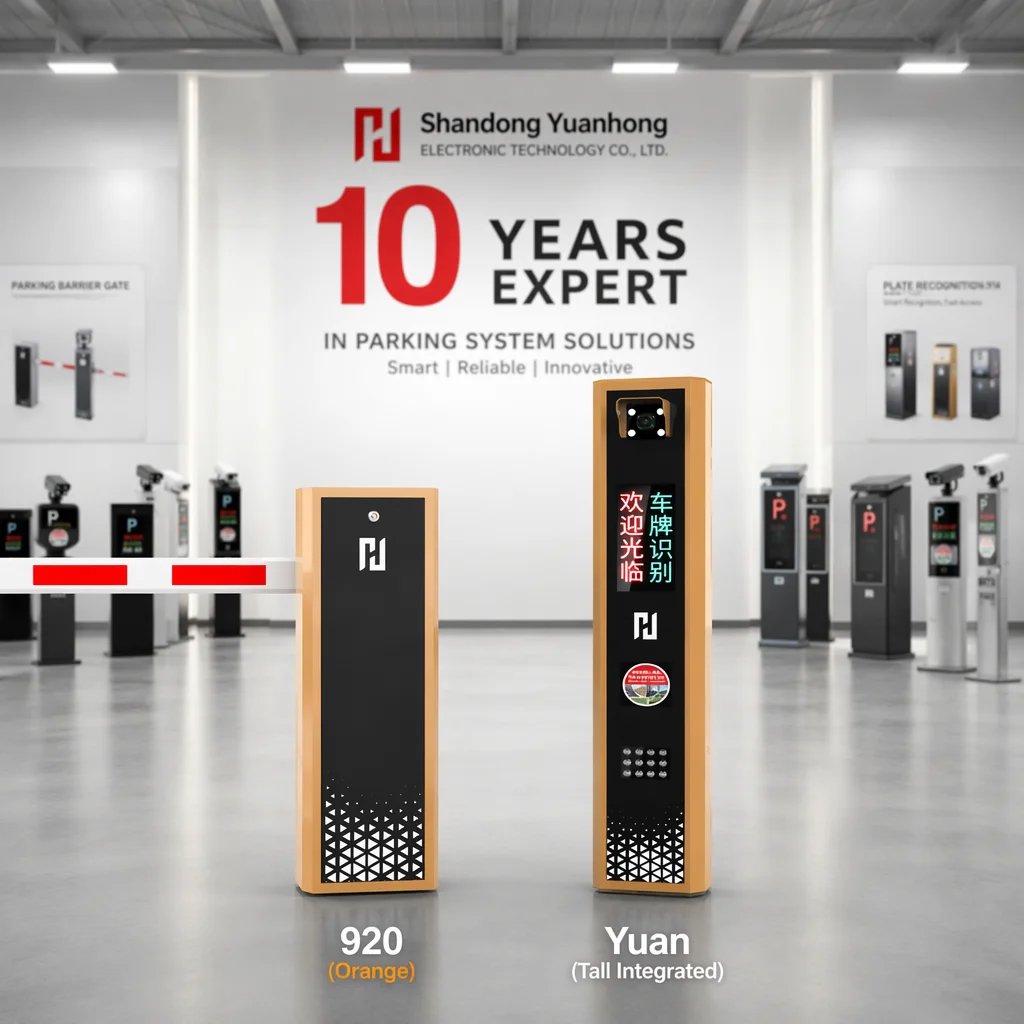
What Is an RFID Parking Barrier?
An RFID parking barrier is an access-control arrangement in which an RFID reader identifies an authorised credential and triggers a connected automatic barrier gate. Depending on the deployment, credentials may be assigned to residents, season-parking users, employees, contractors or fleet vehicles. Administrators can then manage credentials according to the site's access policy.
RFID systems vary. Some use cards or key fobs presented close to a reader; others use vehicle-mounted tags or transponders that can be read at a designed distance. Before selecting a system, confirm the credential type, reading range, installation position, vehicle approach speed and compatibility with the barrier controller. Do not assume every RFID reader or tag works with every access-control platform.
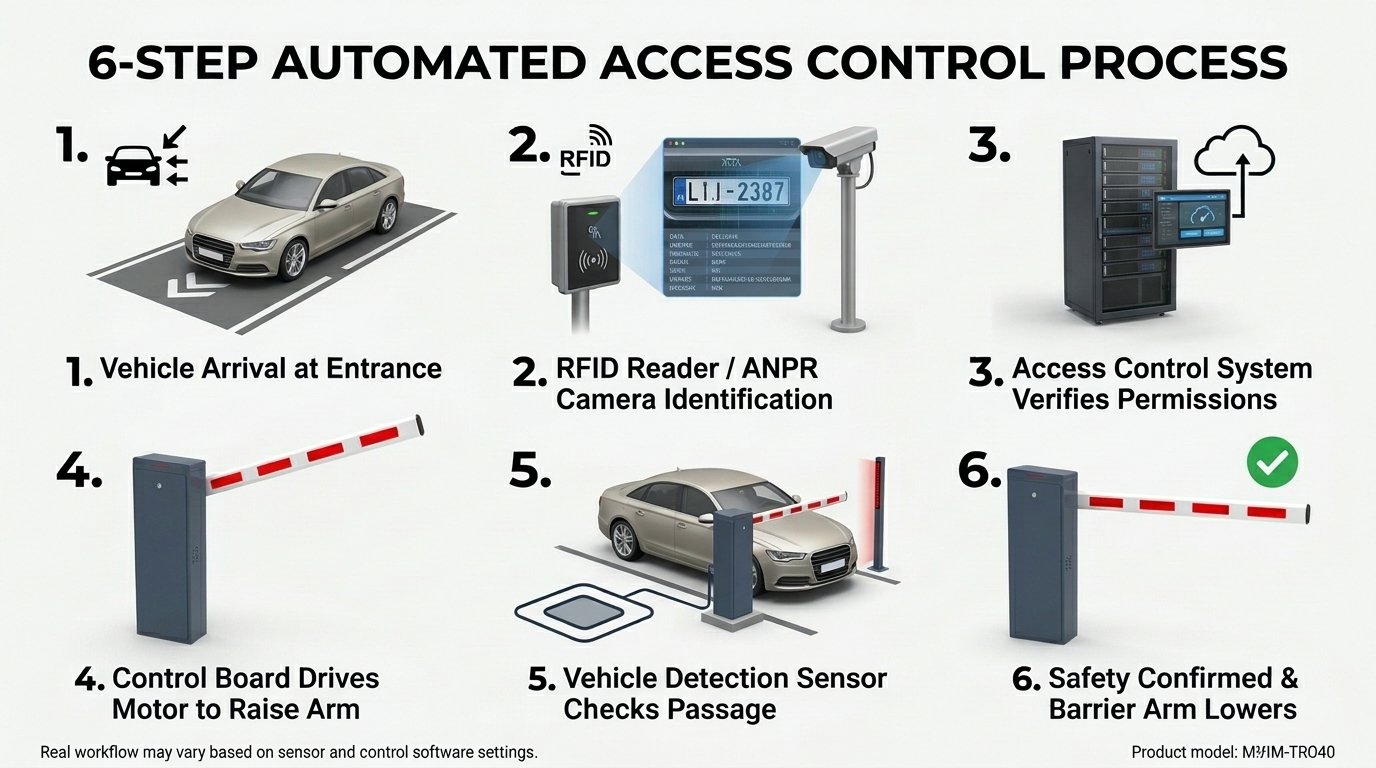
How RFID Barrier Access Works
- A vehicle approaches the entry lane. The lane layout guides the vehicle to the reader and stopping point.
- The reader detects the credential. The driver presents an authorised card or tag, or the installed system reads a compatible vehicle transponder.
- The system checks permission. The access controller checks the credential against the configured access rules or connected database.
- The barrier receives the open command. If access is approved, the controller activates the barrier mechanism.
- Safety devices monitor vehicle movement. Suitable loop detectors, radar or photoelectric sensors help detect vehicles and reduce the risk of the arm closing while a vehicle is in the danger zone.
- The vehicle passes and the barrier closes. The system returns to its ready state; where the software supports it, the access event is logged.
The exact behaviour depends on the equipment and integration. For example, a reader may be connected directly to a barrier controller or through a wider parking access-control platform. During commissioning, test valid and invalid credentials, expired tags, tailgating, sensor detection, manual release and the agreed procedure for power or network interruptions.
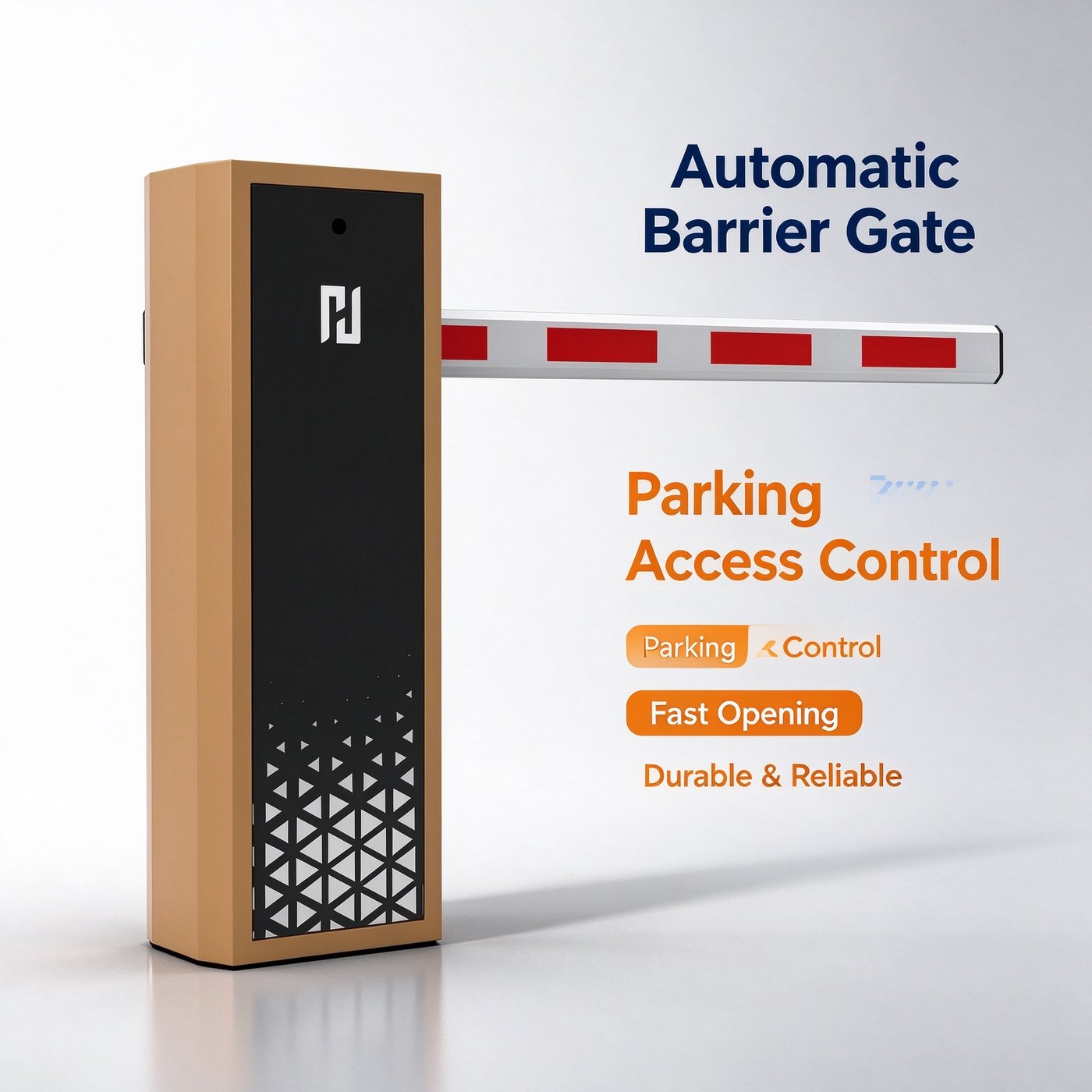
Key Benefits of RFID Parking Barriers
1. Faster access for regular users
Drivers with valid credentials can use a familiar access process instead of stopping to request manual authorisation on every visit. The real improvement depends on reader performance, credential placement, lane geometry and how quickly the access database responds. Poorly positioned readers or inconsistent tag placement can still cause delays.
2. More consistent access rules
Access permissions can be assigned to specific user groups, entrances or time periods when the chosen software supports those controls. This helps property managers distinguish resident, staff, contractor and fleet access. Clear rules and regular reviews are important, especially when users move out, change roles or lose a credential.
3. Reduced dependence on manual checks
For routine access, an automated credential check can reduce the need for a guard or operator to verify every vehicle individually. It does not remove the need for security staff, visitor management or exception handling where these are required. Sites should define how delivery drivers, visitors and emergency vehicles are handled.
4. Useful access records
When the system is connected to software that records access events, operators may be able to review credential activity and investigate entry issues. Logging capabilities vary by platform, so confirm which events are recorded, how long records are retained, who can access them and how personal data is protected.
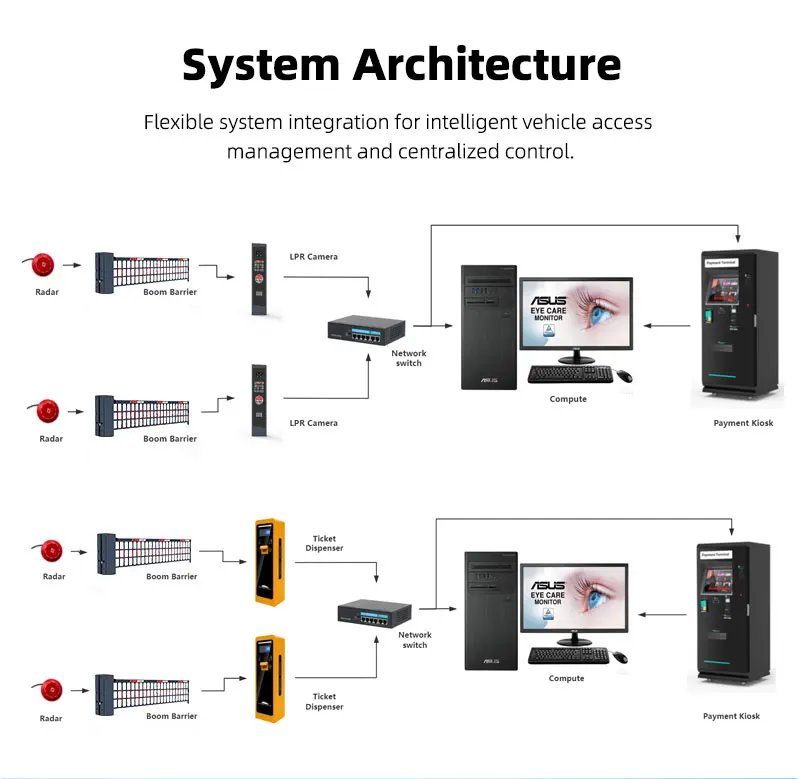
5. Integration with a wider parking system
An RFID barrier may form part of a broader setup with parking management software, payment systems, CCTV, intercoms or visitor registration. Integration can simplify operations, but it must be verified for the specific products involved. Ask suppliers to document interfaces, supported protocols, responsibilities and acceptance tests.
Where RFID Parking Barriers Are Useful in Singapore
Condominiums and residential developments
RFID credentials can support regular access for residents and approved season-parking users. Management should also plan for visitors, temporary contractors, delivery vehicles, lost cards and changes to resident records. An RFID credential should not automatically be treated as proof that every vehicle occupant is authorised.
Office buildings and commercial premises
Employers or property managers may issue credentials to employees and approved service providers. Different permissions can help separate staff parking from visitor or loading areas if the access-control platform supports separate rules and readers.
Industrial and logistics sites
RFID may be useful for recurring fleet movements and authorised vehicles entering a controlled yard. The system should be selected for the vehicle types, environmental exposure, traffic frequency and required lane throughput. For heavy vehicles, consider the position of the reader, the stopping distance and the safety sensors.
Commercial car parks
RFID can support season parking or other approved-user access, while visitors may continue to use ticketing, payment or a separate registration workflow. Decide how these access paths interact so that a visitor process does not conflict with the regular-user lane.
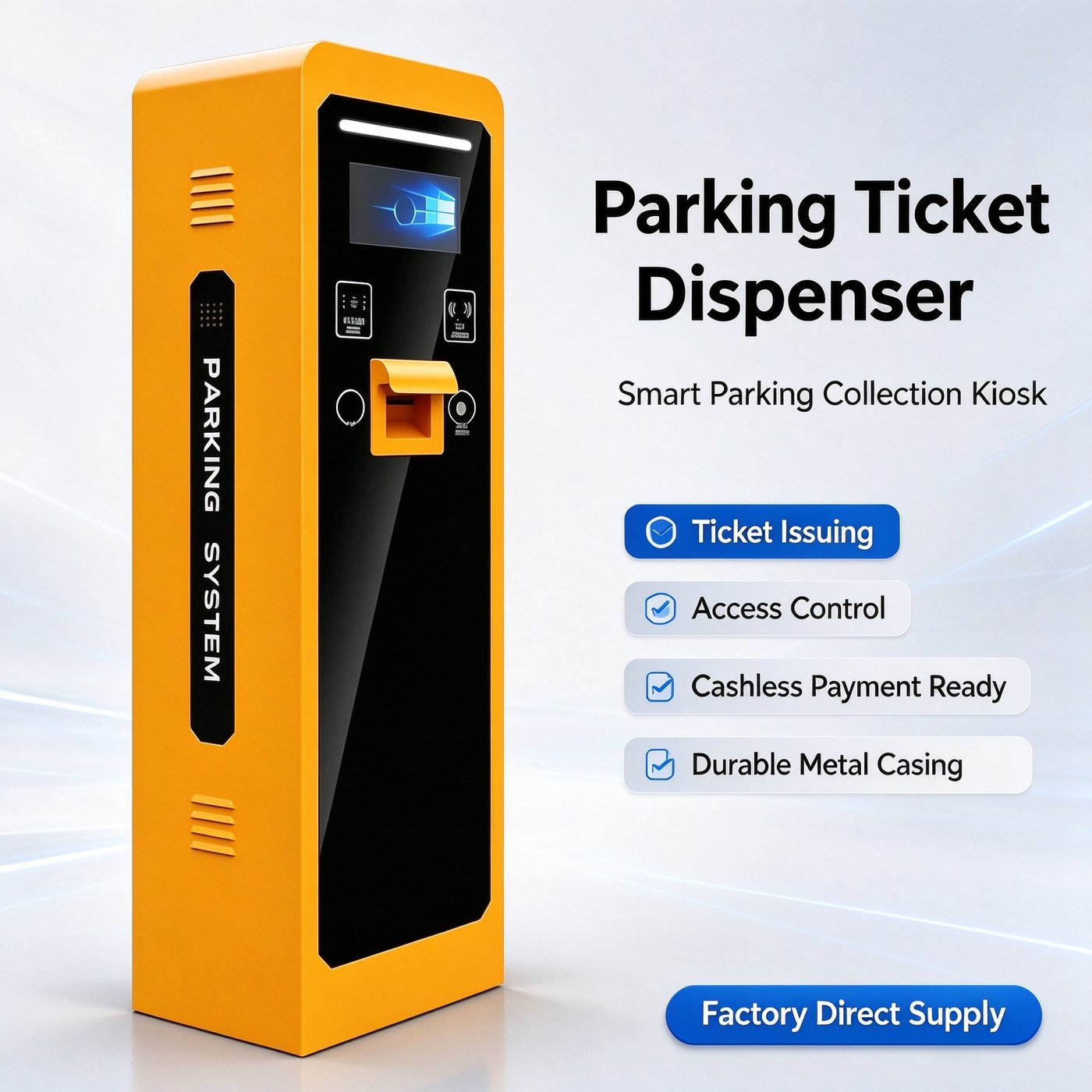
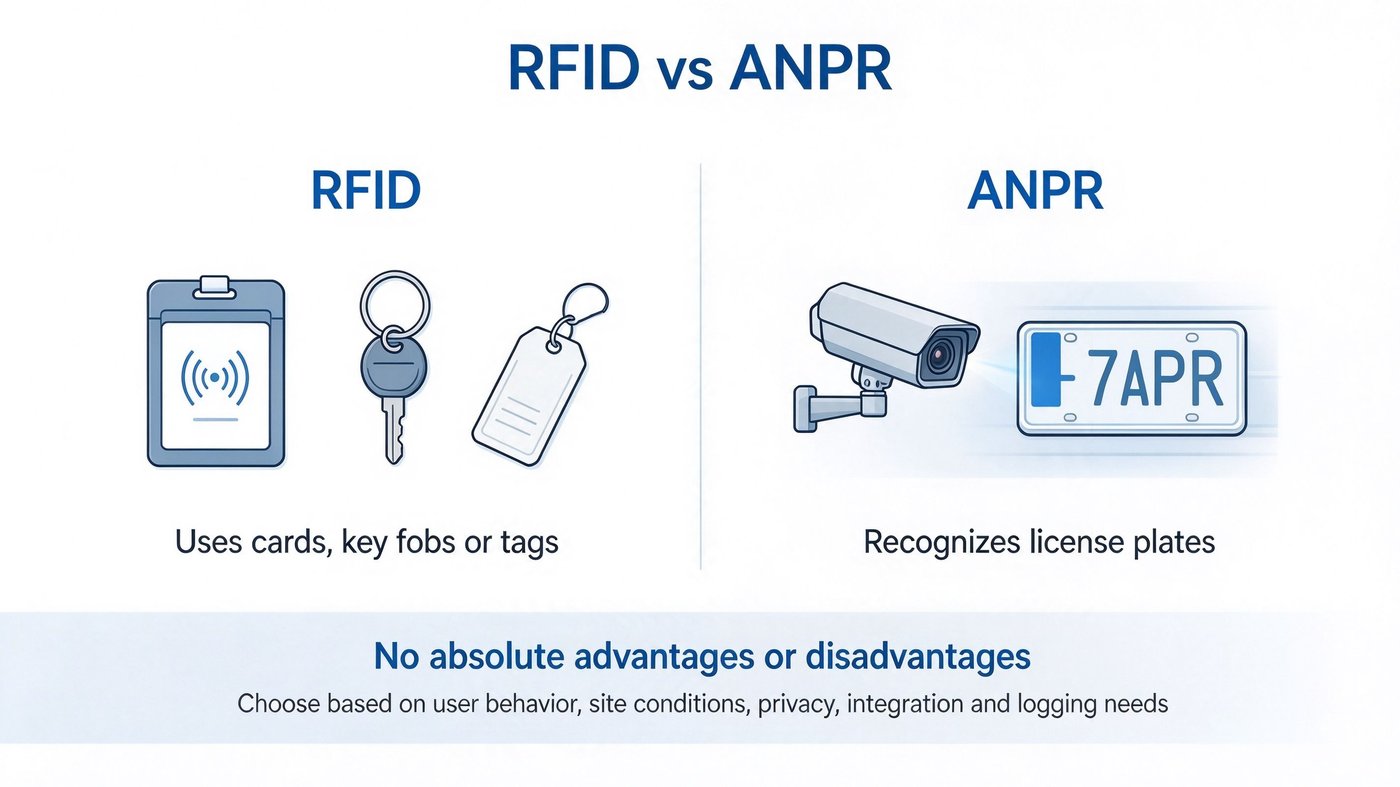
RFID vs Licence Plate Recognition (LPR/ANPR)
RFID and licence plate recognition solve related but different access-control needs. RFID checks a credential or transponder; LPR/ANPR uses a camera and software to read a vehicle registration number. RFID can be suitable when users are issued managed credentials. LPR/ANPR may be useful when access needs to be associated with a registered vehicle plate, subject to camera performance and the site's data policies. For sites comparing both options, a dedicated LPR/ANPR parking barrier system can be reviewed alongside an RFID configuration.
| Consideration | RFID | LPR/ANPR |
|---|---|---|
| What is identified? | Card, tag or transponder | Vehicle registration plate |
| Main dependency | Credential and reader compatibility | Camera view, lighting and plate readability |
| Common use case | Residents, staff, season parking and fleets | Registered vehicles, ticketless workflows and selected visitor processes |
| Operational consideration | Lost, shared or expired credentials | Unreadable plates, plate changes and camera/database errors |
| Integration | Verify controller and software compatibility | Verify camera, recognition software, access rules and controller compatibility |
The two methods can sometimes be combined, but this adds design and integration considerations. Choose based on actual access policies, operating costs, privacy obligations and fallback procedures—not on the assumption that one technology is always better.
How to Choose an RFID Parking Barrier
Check the daily traffic and lane layout
Estimate peak-hour arrivals, daily vehicle movements, lane width, boom length and available space around the cabinet. Confirm whether vehicles can safely stop at the reader without blocking a public road or an internal circulation route. The barrier's duty rating and opening speed should match the expected workload.
Confirm RFID credentials and reading range
Identify whether the project needs cards, key fobs or vehicle-mounted tags. Ask the supplier to demonstrate reading performance in the proposed position and with the actual vehicle approach. Metal surfaces, mounting height, orientation and nearby equipment can affect performance depending on the technology.
Verify system compatibility
Confirm the reader's output, controller input, communication method, supported access rules and integration with any existing parking management platform. Obtain a written system diagram and list of included components. Avoid assuming that products from different suppliers will connect without configuration or additional interfaces.
Plan safety and exception handling
Ask about vehicle detection, anti-collision logic, manual release, emergency access, power failure behaviour and procedures for a reader or network fault. Safety devices must be selected and positioned for the real lane geometry and vehicle types. A boom barrier controls vehicle movement; it is not a substitute for pedestrian gates or perimeter security where these are needed.
Review credential administration and privacy
Set a clear process for issuing, suspending, replacing and revoking credentials. Limit administrative access to authorised personnel and review logs and retention practices. For Singapore deployments, assess applicable personal-data and security obligations with the site's responsible party; do not collect or retain more information than the operation needs.
Consider maintenance and support
Check spare-parts availability, technical support, fault diagnostics, maintenance access and service response arrangements. Record the installed model, reader type, controller settings, credential policy and commissioning results so future troubleshooting does not depend on undocumented knowledge.
How BAROXON Fits into an RFID Parking Access Project
BAROXON's Singapore-facing website presents parking barrier and access-control product categories, including automatic barrier gates and boom gates, RFID-related parking solutions and outdoor parking barrier gates. For a specific project, confirm the current model, supported reader or credential type, controller interfaces, boom length, operating rating and included safety devices against the product datasheet and supplier's written proposal. Do not assume that every model includes every RFID component as standard.
Before requesting a quotation, prepare the site type, number of entry and exit lanes, estimated traffic, required credential format, existing software interfaces, safety requirements and installation conditions. This gives the supplier enough context to recommend a system configuration and identify integration work that may be needed.
Frequently Asked Questions
Do RFID parking barriers work for season parking in Singapore?
They can support season-parking access when each authorised user or vehicle has a compatible credential and the system is configured with the appropriate permissions. Confirm how new users, expired permits, replacement vehicles and lost credentials are managed.
Can RFID barriers be integrated with existing car park software?
Potentially, but compatibility depends on the reader, controller, software interfaces and access rules. Request written confirmation of supported integrations and test the complete workflow before deployment.
What happens if an RFID card or tag is lost?
The site's administrator should be able to suspend or revoke the lost credential and issue a replacement according to the system's capabilities. Test this process and define who is authorised to approve changes.
Is RFID more secure than LPR/ANPR?
Neither is automatically more secure in every situation. RFID depends on credential control and the reader design; LPR/ANPR depends on reliable plate recognition, correct registration records and access rules. Security also depends on anti-tailgating measures, staff procedures, system configuration and how exceptions are handled.
Does an RFID parking barrier eliminate queues?
Not necessarily. It can simplify credential verification, but queues may still occur if vehicles cannot approach the reader smoothly, the lane is too narrow, the barrier is undersized or other steps—such as payment and visitor approval—take too long. Measure the whole entry process before deciding which improvement is needed.
Conclusion
RFID parking barriers can improve vehicle access management by automating credential checks, applying consistent access rules and supporting a more organised entry process for regular users. For Singapore properties, success depends on choosing the right barrier, reader and credential type; integrating them with existing systems; providing appropriate safety devices; and maintaining a clear credential-administration process. A site assessment and documented commissioning test are essential before the system goes live.
Latest News
Baroxon® | Leading Boom Barrier Manufacturer
Advanced Security Access Control and Intelligent Parking Solutions.
Company Strength
Adequate Inventory
Fast Shipping
Our Products
CONTACT US
Address: No. 2 Wanshou Road, International Innovation Industrial Park, Jinan, Shandong, China




© COPYRIGHT 2025 Baroxon® | Leading Boom Barrier Manufacturer


Contact Us
Professional Manufacturer of Vehicle Barriers & License Plate Recognition Cameras,Smart Parking Access Control Solutions for Global Clients,Reliable Barrier Gates + LPR Systems, Customized to Your Project,From residential communities, commercial shopping malls, industrial parks to highway toll stations, our matched barrier & LPR sets can realize automatic license plate identification, automatic gate lifting, real-time access records, automatic charging and remote management.