
What Is a Parking Barrier? Types, Uses and How It Works in Singapore
Release time:
2026-10-30
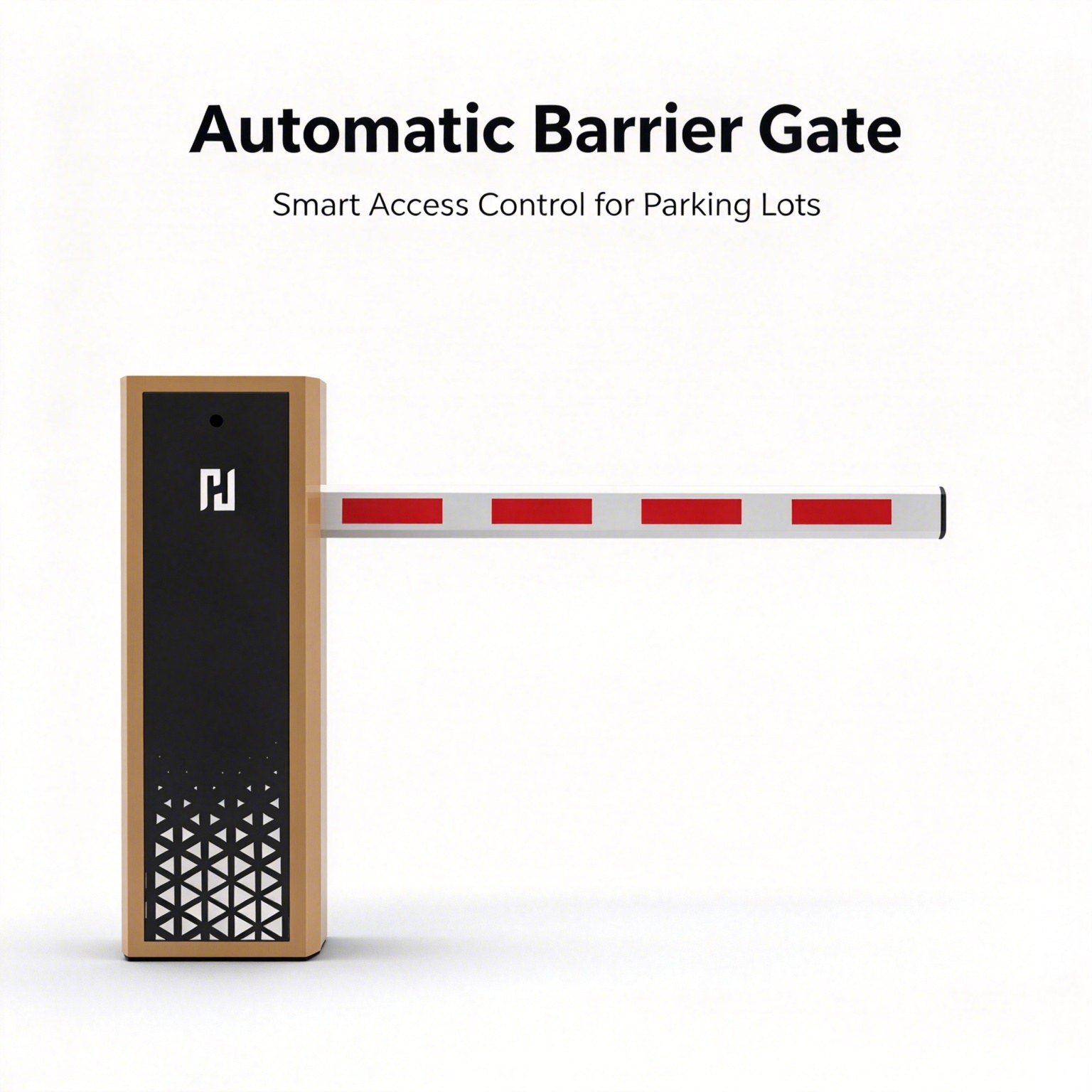
A parking barrier is a vehicle access control device that opens and closes a boom arm to regulate vehicles entering or leaving a car park, condominium, office building, industrial facility or other controlled site. In Singapore, it is commonly called a car park barrier, boom barrier, boom gate or car park gantry, depending on the context. A modern system can operate with an access card, RFID tag, licence plate recognition (LPR/ANPR), ticketing equipment or a parking management platform.
What Does a Parking Barrier System Do?
A parking barrier controls the vehicle lane and provides a defined point at which access can be granted, recorded or refused. Depending on the configuration, it can help manage season parking, resident and visitor entry, staff access, delivery vehicles, paid parking and restricted industrial traffic. The barrier is the physical part of the system; the reader, sensors, controller and software determine when it should open and close.
For Singapore properties, the right setup depends on the traffic pattern and operating model. A condominium may prioritise resident convenience and visitor verification; a shopping mall may need to process high vehicle volumes and paid parking; a logistics site may require RFID identification and reliable operation during frequent truck movements. The barrier should be selected as part of a complete access solution rather than as a standalone arm.

Main Types of Parking Barriers
1. Standard automatic boom barrier
A standard automatic boom barrier uses a motorised cabinet and a horizontal arm that lifts to allow a vehicle to pass. It is a common choice for residential developments, office car parks, commercial premises and controlled vehicle entrances. When specifying a model, check lane width, boom length, opening speed, daily operating cycles, safety accessories and the access-control method.
2. High-speed barrier gate
A high-speed barrier is designed for sites where vehicles arrive frequently and queues must be kept under control. It may suit busy commercial car parks, transport facilities and other high-throughput entrances. The required speed should be matched to the traffic flow and safety system; a faster arm alone will not solve queues if payment, credential checks or lane layout are the real bottlenecks.
3. Folding-arm barrier
A folding-arm barrier is designed for entrances where overhead clearance is limited, such as some basement or multi-storey car parks. The arm folds as it opens to fit the available vertical space. Before choosing one, measure the actual clearance, including signs, pipes, lighting and any vehicle-height restrictions.
4. Heavy-duty and industrial barrier
Heavy-duty barriers are intended for demanding sites such as logistics yards, factories, service entrances and high-frequency vehicle lanes. The selection should consider vehicle type, arm length, operating cycles, exposure to weather, impact risk and maintenance access. For truck lanes, the control logic and sensor placement should be planned around the vehicle's dimensions and movement.
5. RFID-enabled barrier
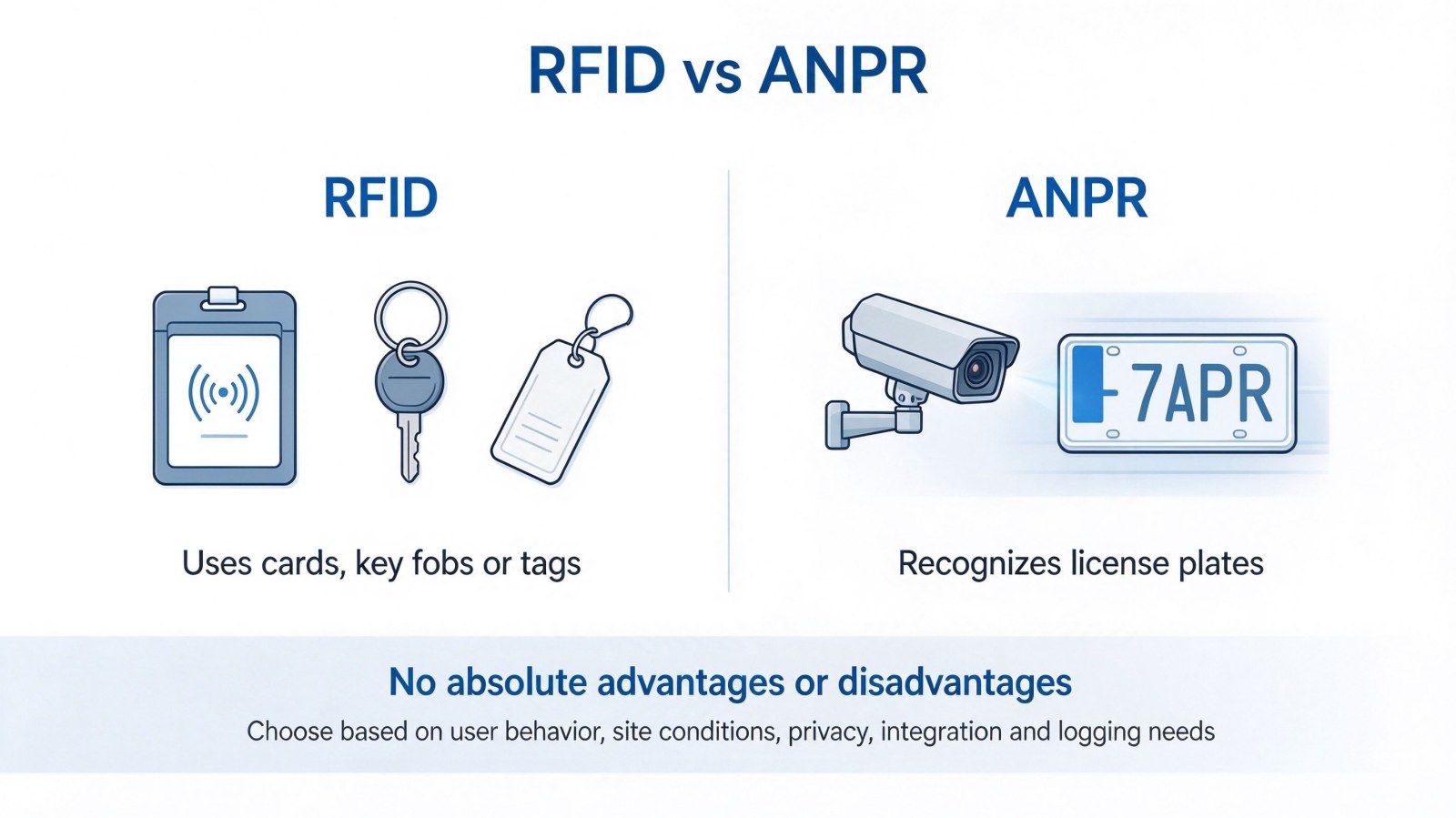
An RFID barrier works with authorised cards, tags or compatible transponders. It can support staff access, season parking and fleet entry, depending on the reader and system configuration. Confirm reading distance, credential management, compatibility with the existing parking platform and the process for lost or unauthorised tags.
6. LPR/ANPR-integrated parking barrier
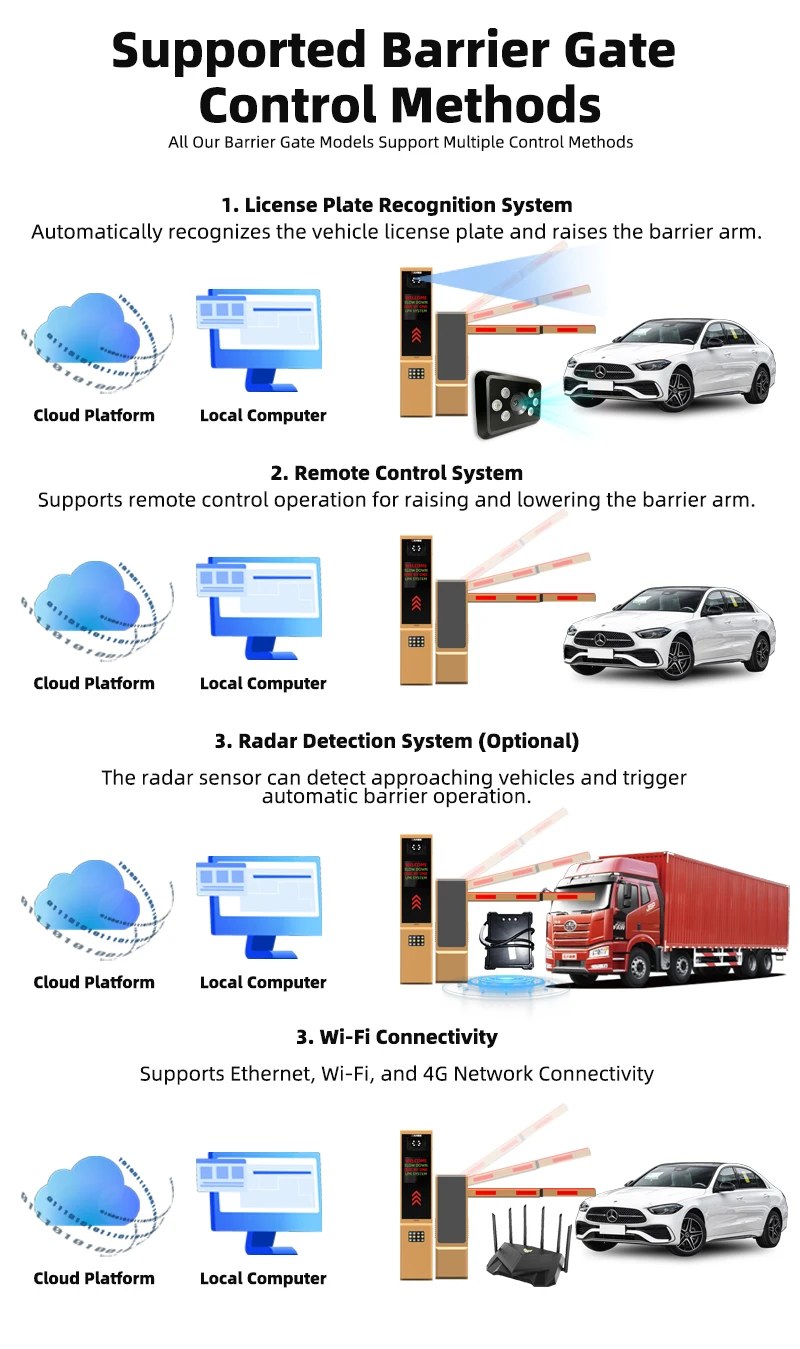
A licence plate recognition system uses a camera and software to identify a vehicle registration number and compare it with the site's access records. When correctly configured, an LPR/ANPR system can support ticketless entry, resident access and automated parking workflows. Camera positioning, lighting, plate visibility, database accuracy and a fallback process all affect performance.
How Does an Automatic Parking Barrier Work?
Most automatic parking barrier systems follow a similar sequence:
- A vehicle approaches the lane. Sensors or the access device detect that a vehicle is present.
- The system checks authorisation. The driver may present a card or RFID tag, use an approved ticket or payment workflow, or have the licence plate read by an LPR/ANPR camera.
- The controller receives a valid signal. If the credential or vehicle record is accepted, the controller activates the barrier motor.
- The boom arm rises. The vehicle passes through the controlled lane.
- Safety devices monitor the vehicle. A suitable loop detector, radar or photoelectric sensor helps detect the vehicle and reduce the risk of the arm closing at the wrong time.
- The arm closes and the event is recorded. The system returns to its ready state and, where supported, records the entry or exit in the parking management software.
The exact sequence depends on the equipment and integration. A barrier should not be assumed to open merely because a camera is installed: the camera, recognition software, access rules, controller and barrier must be configured to communicate correctly. Site testing should include authorised and unauthorised vehicles, tailgating scenarios, sensor faults and the agreed response to power or network interruptions.

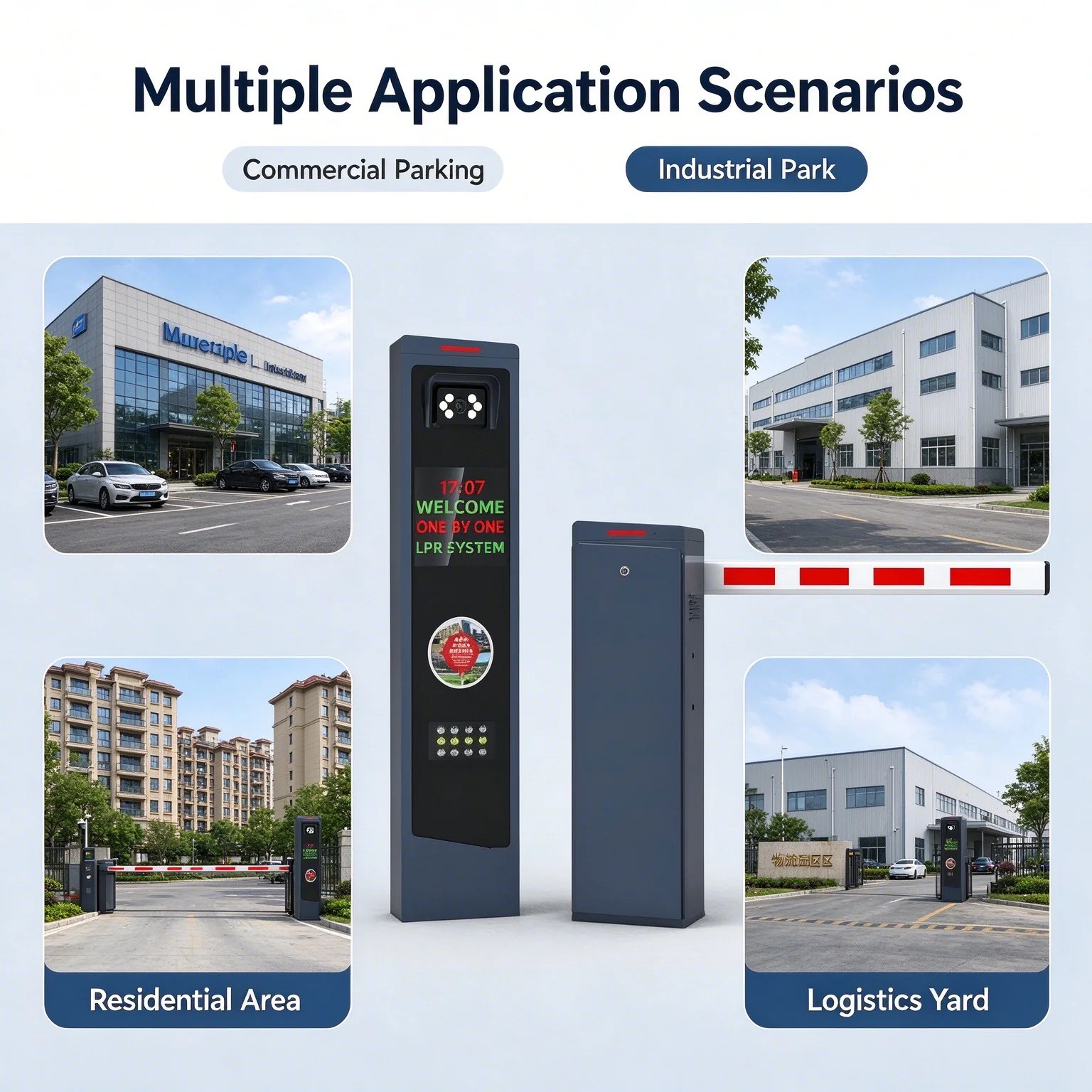
Where Are Parking Barriers Used in Singapore?
- Condominiums and residential developments: manage resident, tenant, visitor and delivery access.
- Commercial buildings and office parks: separate staff, visitor and service-vehicle flows.
- Shopping malls and public car parks: support ticketing, payment and parking management.
- Factories and logistics warehouses: control frequent vehicle and truck movements, potentially using RFID and radar detection.
- Transport and toll facilities: manage repeated vehicle movements where throughput and operational continuity are important.
- Schools, hospitals and public institutions: control vehicle entrances while keeping pedestrian access arrangements separate and safe.
How to Choose the Right Parking Barrier
Assess traffic volume and duty cycle
Estimate the number of vehicle movements per day and identify peak periods. Choose a barrier rated for the actual workload, allowing for visitor traffic, deliveries and future growth. Ask the supplier to explain the rated cycle life and the conditions under which any performance figures were measured.
Measure the lane and available clearance
Confirm the lane width, boom length, cabinet position, vehicle turning path and any overhead obstruction. For basement car parks, verify whether a straight arm can rise fully or whether a folding arm is needed. Do not rely on drawings alone; check site measurements before installation.
Select the access method
Choose between access cards, RFID, LPR/ANPR, ticketing or a combined configuration based on user groups and the existing parking workflow. Check whether the system can integrate with the current parking management, payment and access-control platform. Ask for a documented interface and commissioning plan rather than assuming universal compatibility.
Review safety and failure handling
Ask about anti-collision logic, loop detectors, radar or photoelectric sensors, manual release, emergency procedures and behaviour during power or network loss. A barrier manages vehicle access but is not a substitute for perimeter fencing, a security gate or pedestrian access control where those are required. Final safety design should be reviewed for the actual site and applicable local requirements.

Plan for maintenance and support
Check the availability of spare parts, technical support, maintenance access and fault diagnostics. For high-traffic sites, agree on a maintenance schedule and response expectations before handover. Record the installed model, configuration, wiring, access rules and commissioning results for future troubleshooting.
Why Consider BAROXON for a Singapore Car Park?
BAROXON's Singapore website presents a range covering boom barriers and boom gates, high-speed barrier gates, automatic RFID barriers, ALPR/LPR systems, radar sensors and related parking/access-control equipment. This makes it possible to discuss the barrier and its access-control components as one project. The suitable model and configuration should still be confirmed against the lane dimensions, traffic demand, integration requirements and site conditions.
For a project enquiry, prepare the site type, number of lanes, approximate daily vehicle volume, boom length, access method, existing software or payment platform, safety requirements and preferred commissioning schedule. These details help the supplier recommend a configuration that fits the actual operating conditions.
Frequently Asked Questions
Is a parking barrier the same as a boom gate?
The terms are often used interchangeably. “Parking barrier” describes the function, while “boom barrier” or “boom gate” highlights the rising arm. In Singapore, “car park barrier” and “car park gantry” are also common terms.
Can a parking barrier work with licence plate recognition?
Yes, if the barrier controller, LPR/ANPR camera, recognition software and access rules are integrated and tested together. Confirm how the system handles unreadable plates, visitors, motorcycles if applicable, and network interruptions.
Is a parking barrier enough to secure a site?
A boom barrier controls vehicle movement at a lane, but it does not by itself prevent pedestrians from walking around the arm or provide full perimeter protection. Where required, combine it with fencing, a vehicle gate, CCTV, guard procedures and a separate pedestrian access-control system.
What information is needed before requesting a quotation?
Provide the site type, lane width, expected traffic, preferred boom type, access method, existing system interfaces, safety requirements and installation conditions. Photos or a site plan can help the supplier assess the layout, but sensitive security information should be shared only through an appropriate channel.
Conclusion
A parking barrier is more than a motorised arm: it is a vehicle access point that must work with the site's traffic pattern, authorisation method, safety devices and parking workflow. For Singapore car parks, compare barrier type, operating capacity, clearance, LPR/RFID integration, safety and after-sales support before selecting a system. A properly specified solution can help manage vehicle entry more consistently and reduce avoidable delays.
Latest News
Baroxon® | Leading Boom Barrier Manufacturer
Advanced Security Access Control and Intelligent Parking Solutions.
Company Strength
Adequate Inventory
Fast Shipping
Our Products
CONTACT US
Address: No. 2 Wanshou Road, International Innovation Industrial Park, Jinan, Shandong, China




© COPYRIGHT 2025 Baroxon® | Leading Boom Barrier Manufacturer


Contact Us
Professional Manufacturer of Vehicle Barriers & License Plate Recognition Cameras,Smart Parking Access Control Solutions for Global Clients,Reliable Barrier Gates + LPR Systems, Customized to Your Project,From residential communities, commercial shopping malls, industrial parks to highway toll stations, our matched barrier & LPR sets can realize automatic license plate identification, automatic gate lifting, real-time access records, automatic charging and remote management.