
What Is the Difference Between RFID and ANPR Parking Systems?
Release time:
2026-11-03
RFID and ANPR are two common technologies used to automate vehicle access at car parks, condominiums, office buildings, industrial sites and other controlled entrances. RFID identifies an authorised tag or credential, while ANPR (Automatic Number Plate Recognition) identifies a vehicle by reading its registration number plate. Both can trigger an automatic boom barrier, but they suit different operating models and user groups.
For Singapore property managers, the choice is not simply about which technology is newer. It depends on who uses the car park, how visitors are handled, whether parking is paid or permit-based, the required traffic throughput, data-protection practices and how the system must integrate with existing parking software.
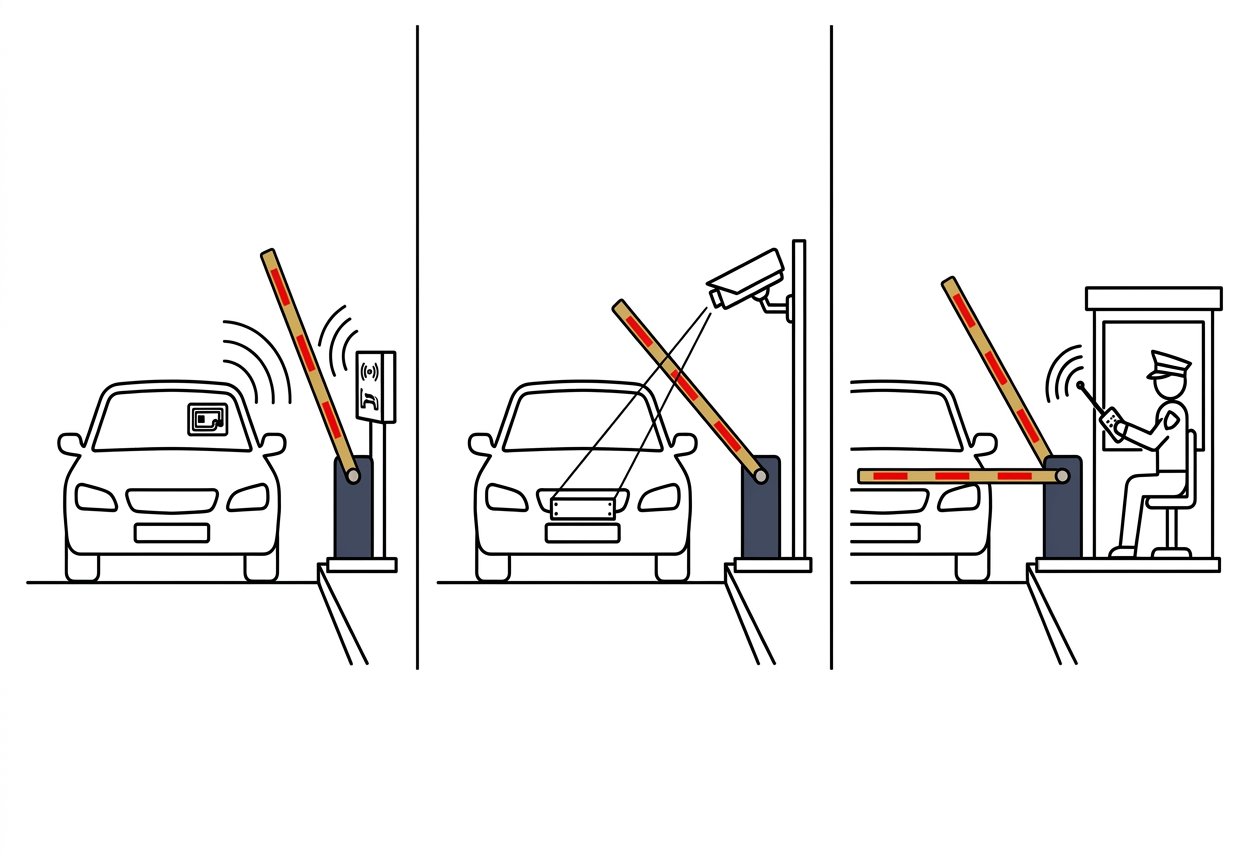
RFID vs ANPR: The Main Differences
| Comparison point | RFID parking system | ANPR/LPR parking system |
|---|---|---|
| What it reads | An RFID card, tag or compatible credential | The vehicle's registration number plate |
| Driver action | May need to carry, present or install an authorised tag, depending on reader type | Usually no tag presentation is needed if the plate can be captured |
| Best-fit users | Registered residents, staff, fleets and permit holders | Public parking, visitors, mixed user groups and ticketless workflows |
| Access decision | Checks the credential ID and its permissions | Checks the recognised plate against access or parking rules |
| Common limitations | Lost, damaged, unregistered or poorly positioned credentials; reader compatibility and range | Unreadable or obscured plates, lighting, camera angle, glare, weather and recognition configuration |
| Data considerations | Credential IDs and access logs need appropriate protection | Plate numbers and vehicle movement records may be personal data when linked to individuals |
| Works with a boom barrier | Yes, when the reader, controller and barrier interface are compatible | Yes, when the camera, recognition software, controller and barrier interface are compatible |
| Can both be used together | Yes | Yes |
How Does an RFID Parking System Work?
1. A vehicle approaches the access lane
The driver approaches the entrance with an authorised RFID card or tag. Depending on the system design, the credential may be presented to a reader or read at a suitable distance by a compatible RFID reader.
2. The reader sends the credential ID to the access controller
The reader sends the credential information to the access-control system. The system checks whether the credential is enrolled, valid and permitted at that entrance and time.
3. The boom barrier opens after approval
If the credential is authorised, the controller sends an opening command to the automatic boom barrier. Vehicle-detection and safety devices should be configured to prevent the arm from lowering onto a vehicle.
4. The system records the access event
Depending on the platform, the system can record the credential, lane, time and access result. Operators should define procedures for lost tags, expired permits, denied access and power or network interruptions.
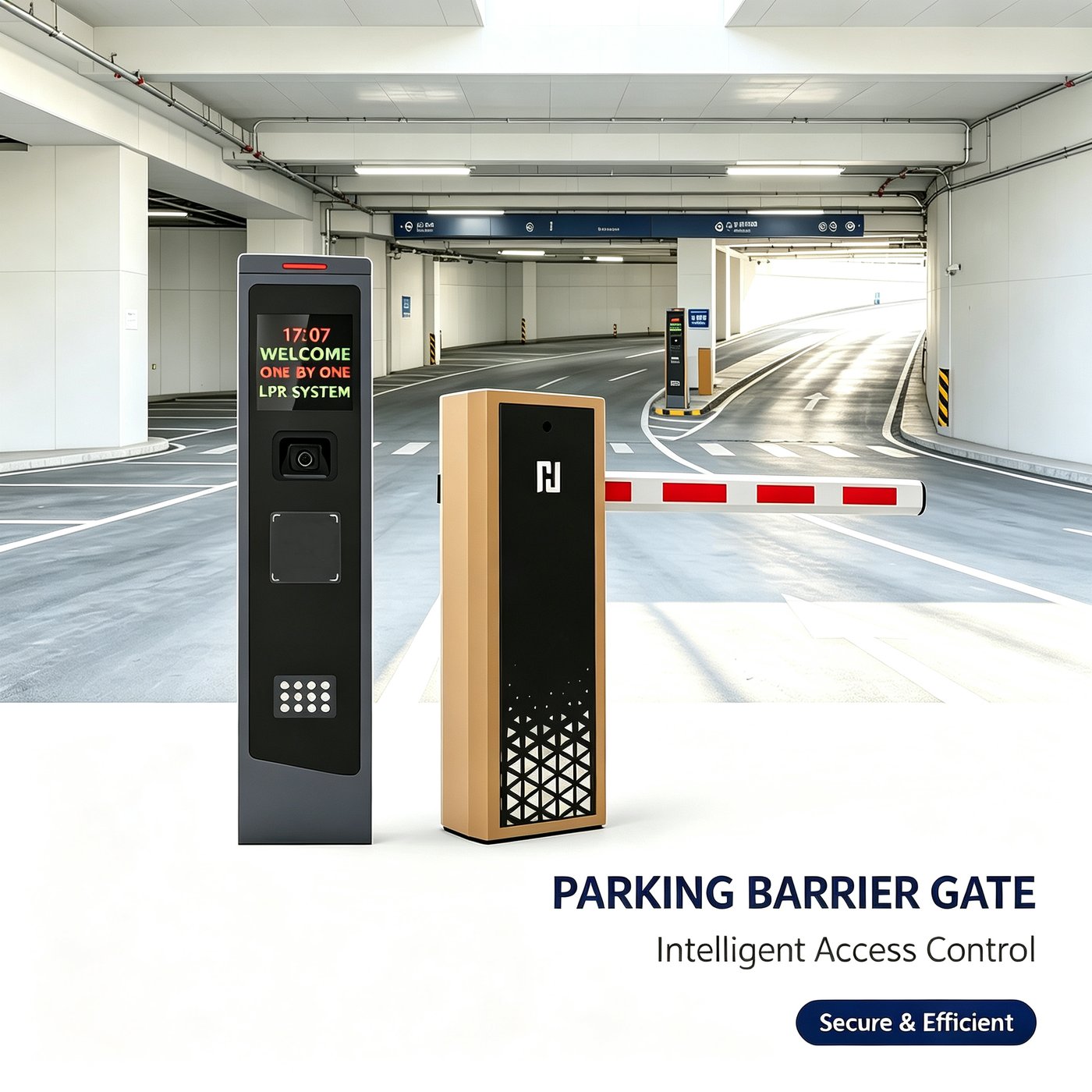
How Does an ANPR Parking System Work?
1. The camera captures the number plate
An ANPR/LPR camera captures the vehicle's number plate as the vehicle approaches the entry lane. The camera angle, mounting position, lighting, vehicle speed and plate condition affect the quality of the image.
2. Recognition software converts the plate into data
Recognition software reads the characters on the captured plate and produces a registration number for the parking or access-control platform to process. The operator should test recognition performance using the types of vehicles and number plates expected at the site.
3. The platform checks the vehicle against its rules
The recognised number plate can be checked against a whitelist, visitor booking, staff list, season-parking record or other configured access rule. For paid parking, the workflow may also need to check parking-session and payment status.
4. The barrier opens and the event is logged
If the access conditions are satisfied, the controller opens the boom barrier and the platform records the event. If the plate cannot be read or the vehicle is not authorised, the system should route the case to a defined exception process rather than relying on guesswork.
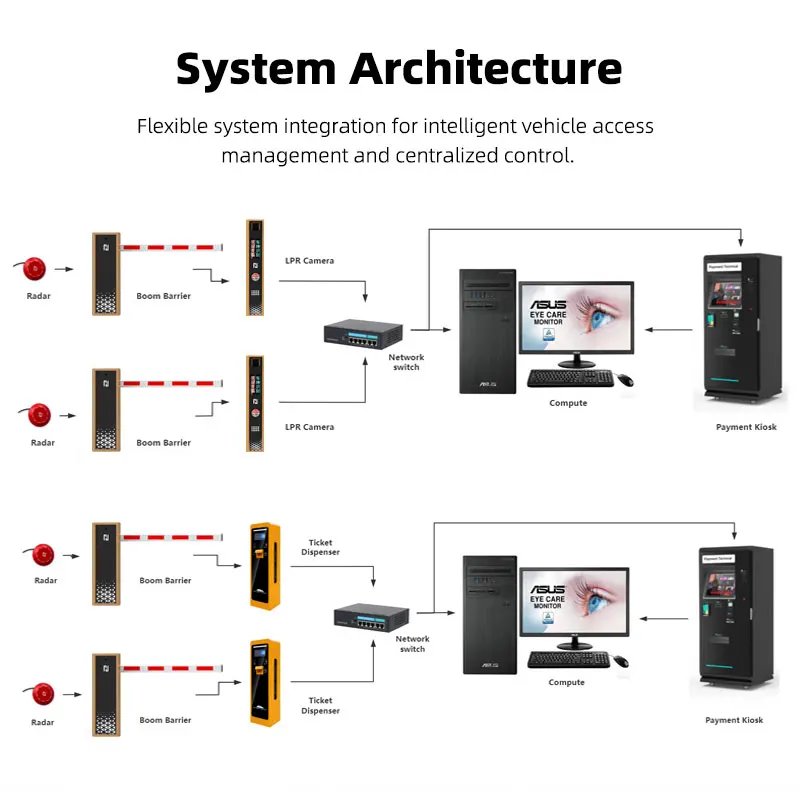
Advantages and Limitations of RFID
Advantages of RFID
- Convenient for registered users: staff, residents and fleet drivers can use an assigned credential.
- Predictable access rules: each credential can be linked to a user, vehicle or permission group.
- Useful for regular traffic: frequent users do not need to depend on camera-based plate recognition every time.
- Can complement ANPR: RFID can remain available for authorised users while ANPR handles visitors or public parking.
Limitations of RFID
- Credentials must be issued, registered and managed.
- Lost or shared tags can create security and administration issues unless access can be revoked promptly.
- Read range and reliability depend on the selected credential, reader, installation and vehicle setup.
- The system may require a separate visitor process for people who do not have a registered credential.
Advantages and Limitations of ANPR/LPR
Advantages of ANPR/LPR
- No need to present a tag: authorised access can be based on the vehicle's number plate.
- Supports ticketless workflows: entry and exit events can be linked to the same recognised plate, subject to system configuration.
- Useful for visitors and public parking: access rules can be linked to bookings, permits or parking sessions.
- Creates searchable vehicle records: where properly configured, records can assist with operational reporting and dispute investigation.
Limitations of ANPR/LPR
- A plate may be difficult to read because of dirt, damage, obstruction, glare, rain or poor lighting.
- Incorrect camera placement or vehicle positioning can reduce recognition performance.
- The operator needs a process for unreadable plates, duplicate records and vehicles that are not on the authorised list.
- Number plates and movement logs need appropriate access controls, retention policies and security measures.
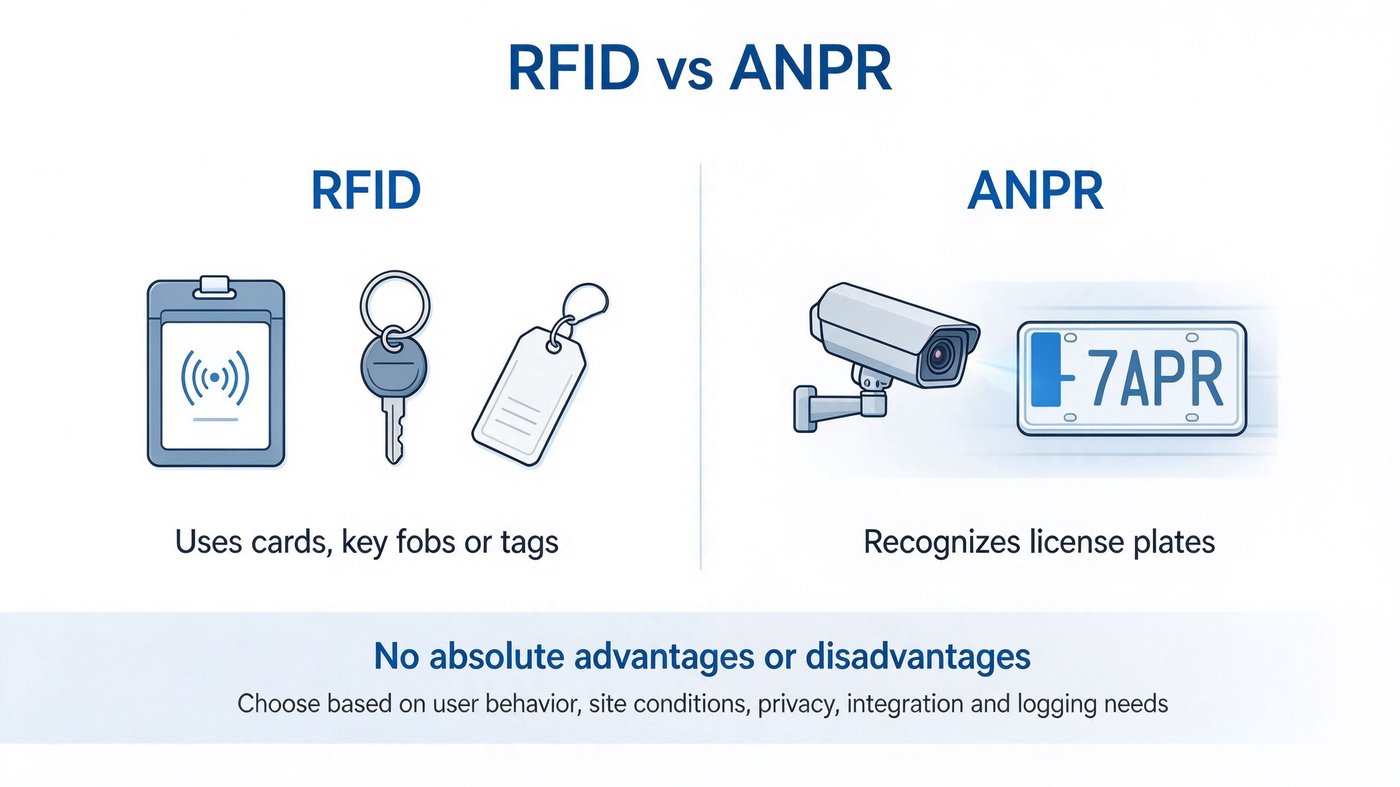
Which System Is Better for Different Singapore Sites?
Condominiums and private residential developments
For a condominium or private estate, RFID can work well for registered residents who use a credential regularly. ANPR can reduce the need for resident vehicles to present a tag and can support visitor workflows when linked to the estate's approved access process. A hybrid setup may suit developments with a large resident base and frequent visitors.
Office buildings and business parks
RFID can be suitable for staff and regular tenants, while ANPR may be useful for visitor bookings, contractor access and shared parking facilities. Before deployment, confirm who can register credentials or number plates, how temporary access expires and which team manages exceptions.
Shopping malls and paid commercial car parks
ANPR/LPR can support ticketless entry and exit when integrated with the parking-management and payment workflow. RFID may still be useful for staff, season-parking users or approved fleets. A camera alone does not constitute a complete paid parking system: the operator must confirm session calculation, payment validation, exit rules and exception handling. See how a ticketless parking management system works for the full workflow.
Industrial sites and logistics facilities
RFID can be effective for known staff vehicles and fleet operations. ANPR can provide an additional vehicle record or support access for vehicles whose plates are registered in advance. Radar or other vehicle-detection equipment may also be required for safe barrier operation, depending on the lane and risk assessment.
Can RFID and ANPR Be Used Together?
Yes. A hybrid parking access system can use RFID for residents, staff or fleet vehicles and ANPR/LPR for visitors, public parking or ticketless entry. The two technologies should share clear access rules and event records through compatible controllers or parking-management software.
Before choosing a hybrid design, decide which method takes priority if both a tag and a number plate are detected, how duplicate events are reconciled, what happens when one reader fails and how staff can override an access decision. These rules should be documented and tested before the car park opens.
BAROXON Product Options for RFID and ANPR Parking
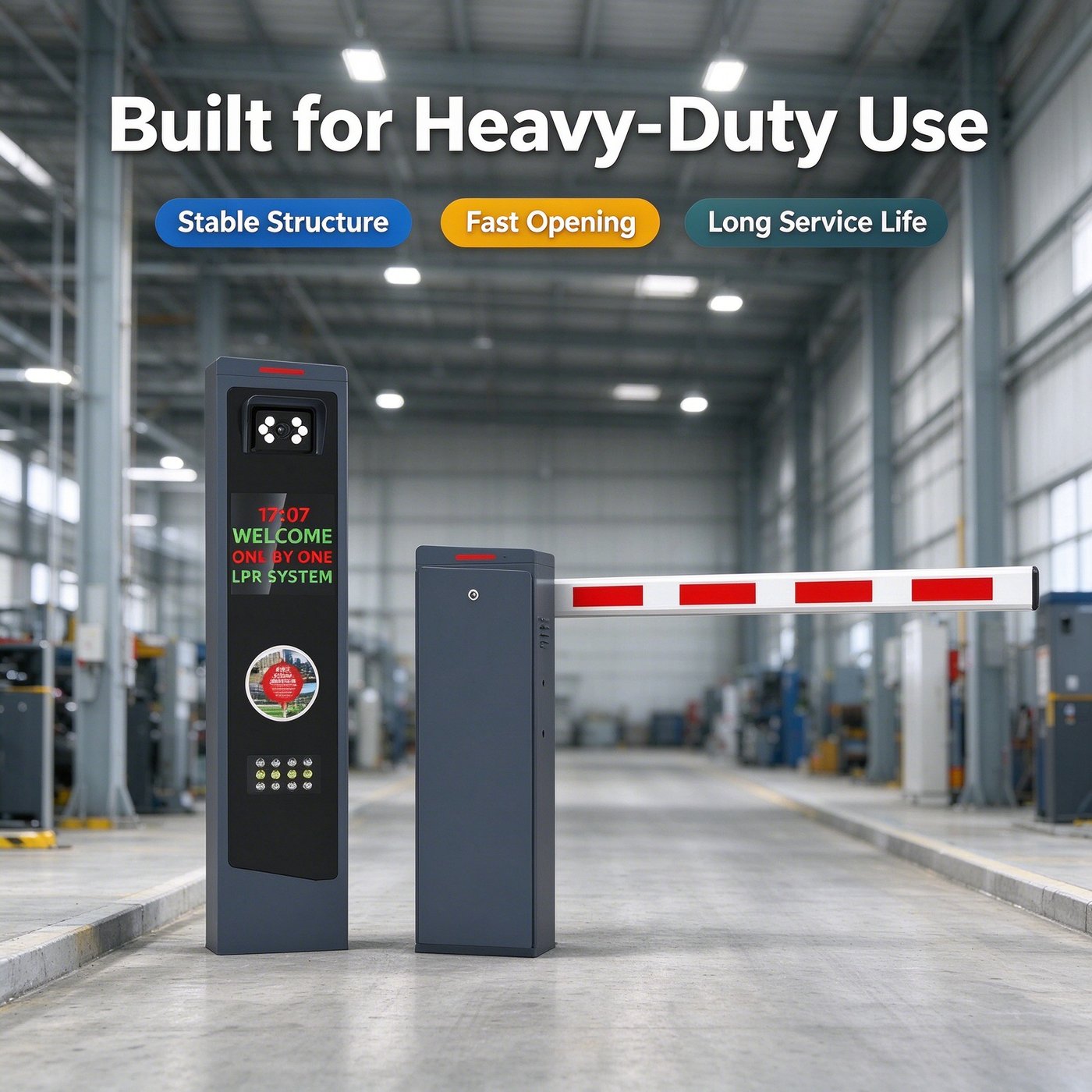
BAROXON's Singapore catalogue lists automatic RFID boom barriers, ALPR/LPR number-plate systems, high-speed barrier gates, standard boom barrier gates for car parks and radar sensors. These product categories can be considered for vehicle access projects in residential communities, commercial car parks, offices and industrial facilities. The final design should match the site's access policy, traffic profile and existing systems.
A BAROXON RFID barrier can be considered where access depends on an authorised tag or credential. An ALPR/LPR parking gate system may be considered where the vehicle's number plate is the main identifier. For high-traffic or mixed-user lanes, ask the supplier to assess whether a hybrid setup, additional vehicle detection and an integrated parking-management platform are appropriate.
Do not assume that every barrier model includes a camera, RFID reader, parking software or payment module. Before ordering, request written confirmation of the included hardware, supported interfaces, software scope, integration responsibility, commissioning tests, warranty and after-sales support.
What Should You Check Before Choosing a System?
- User groups: residents, staff, visitors, contractors, public customers or fleet vehicles.
- Access model: credential whitelist, registered number plates, visitor booking, paid parking or a combination.
- Traffic volume: peak-hour arrivals, departures, queue length and expected barrier cycles.
- Site conditions: lane width, camera mounting position, lighting, rain exposure, vehicle speed and available installation space.
- Safety: vehicle detection, barrier anti-collision logic, emergency access and manual release procedures.
- Integration: existing parking software, payment platform, access control, intercom and reporting requirements.
- Data protection: purpose of collection, authorised users, retention period, cybersecurity and incident handling.
- Support: spare parts, maintenance access, operator training, fault response and warranty terms.
For Singapore projects, number plates and access logs may be personal data when they can be linked to an individual. Define collection purposes, access permissions, retention periods and security measures, and assess the site's obligations under Singapore's Personal Data Protection Act (PDPA). Obtain professional advice where needed.
Frequently Asked Questions
Is RFID more secure than ANPR?
Neither technology is automatically more secure in every scenario. RFID security depends on credential management, reader configuration and how quickly lost credentials can be revoked. ANPR security depends on recognition quality, access rules, camera placement and how exceptions are reviewed. Security also depends on the controller, software, network and operating procedures.
Does ANPR mean drivers never need to stop?
Not necessarily. Vehicles may still need to slow down or stop at the designated capture point. Recognition can fail, traffic may queue, or payment and access rules may require verification. Lane design and on-site testing determine the actual driving experience.
Can RFID work with an automatic boom barrier?
Yes, provided that the RFID reader, access controller and boom barrier support compatible control connections and are configured correctly. Confirm the exact interface and safety logic with the supplier.
Can an ANPR system manage paid parking?
It can support paid parking when integrated with suitable parking-management and payment systems. The project must define how entry and exit times are matched, how fees are calculated, how payment is confirmed and how disputes are handled.
Which system is cheaper?
There is no universal answer. Compare the total cost of readers or cameras, credentials, barrier hardware, software licences, integration, installation, maintenance, replacement credentials and operator workload. The lowest equipment price may not deliver the lowest lifecycle cost.
Is a hybrid RFID and ANPR setup worth considering?
It can be worth considering when the site has both regular registered users and visitors or public parking customers. The benefit depends on clear access rules, compatible integration and a well-tested process for exceptions.
Conclusion: Choose the Technology Around Your Parking Workflow
RFID is often a practical choice for registered users with assigned credentials. ANPR/LPR is often useful when the vehicle's number plate can serve as the access identifier, particularly for visitor or ticketless parking workflows. A hybrid solution may provide the right balance for sites with multiple user groups.
For a Singapore car park, evaluate the full system, not just the reader or camera. Confirm boom barrier compatibility, vehicle safety detection, software and payment integration, data-protection practices and ongoing support. BAROXON's RFID boom barriers, ALPR/LPR systems and barrier-gate products can be assessed against those project requirements before a final configuration is selected. Browse the parking access control product range to compare equipment categories.
Latest News
Baroxon® | Leading Boom Barrier Manufacturer
Advanced Security Access Control and Intelligent Parking Solutions.
Company Strength
Adequate Inventory
Fast Shipping
Our Products
CONTACT US
Address: No. 2 Wanshou Road, International Innovation Industrial Park, Jinan, Shandong, China




© COPYRIGHT 2025 Baroxon® | Leading Boom Barrier Manufacturer


Contact Us
Professional Manufacturer of Vehicle Barriers & License Plate Recognition Cameras,Smart Parking Access Control Solutions for Global Clients,Reliable Barrier Gates + LPR Systems, Customized to Your Project,From residential communities, commercial shopping malls, industrial parks to highway toll stations, our matched barrier & LPR sets can realize automatic license plate identification, automatic gate lifting, real-time access records, automatic charging and remote management.