
What Is a Ticketless Parking Management System?
Release time:
2026-11-03
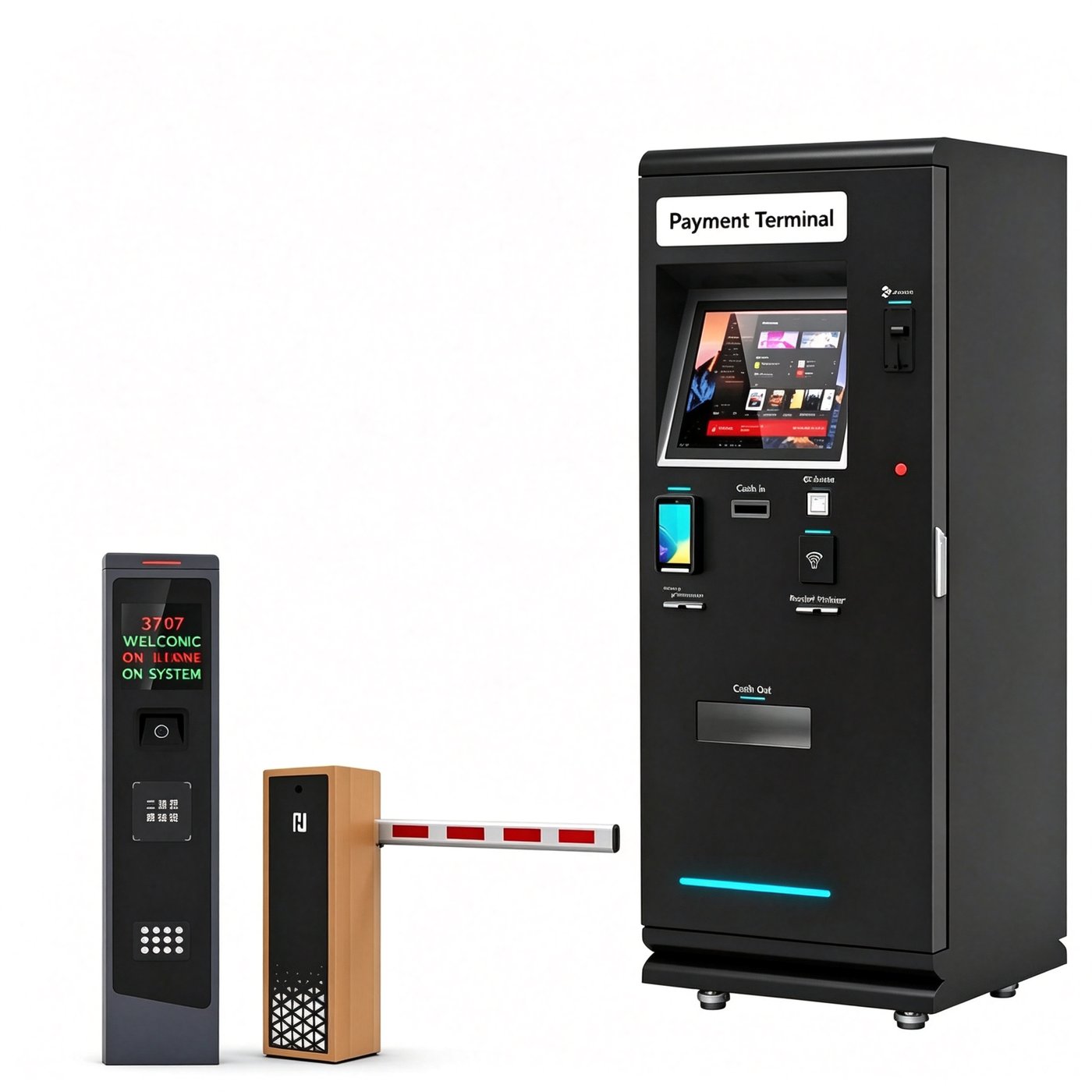
A ticketless parking management system allows drivers to enter and leave a car park without taking or presenting a paper parking ticket. Instead, the system identifies the vehicle, commonly through Automatic Number Plate Recognition (ANPR), also called License Plate Recognition (LPR), and records the vehicle's entry and exit events in parking management software. A boom barrier can then open when the system confirms that the vehicle is authorised to enter or exit.
For a Singapore car park, a ticketless setup can reduce the handling of paper tickets, support smoother entry during peak periods and give operators a clearer digital record of vehicle movements. The exact result depends on lane design, camera placement, traffic volume, payment rules, network reliability and the integration between each component.
A ticketless parking system is not simply a boom gate with a camera. It is an operational workflow linking vehicle identification, access decisions, barrier control, parking-session records and, where required, payment and exception handling.
How Does a Ticketless Parking System Work?
1. A vehicle approaches the entry lane
The driver approaches the designated entry lane at a controlled speed. The lane layout, signage and stop line should help position the vehicle so that the front or rear number plate can be captured clearly, depending on the camera configuration.
2. The ANPR/LPR camera reads the number plate
The camera captures an image and recognition software converts the visible registration number into machine-readable data. Recognition performance can be affected by plate condition, lighting, viewing angle, vehicle speed, reflections, rain and obstruction. Site testing is therefore important before full deployment.
3. The parking system checks access rules
The parking management platform checks the recognised plate against the relevant rules. Depending on the site, these may include a registered season-parking vehicle, an authorised resident, a staff vehicle, a visitor booking or another permitted access category. A recognised plate does not automatically mean that every vehicle should be admitted; the system must apply the site's access policy.
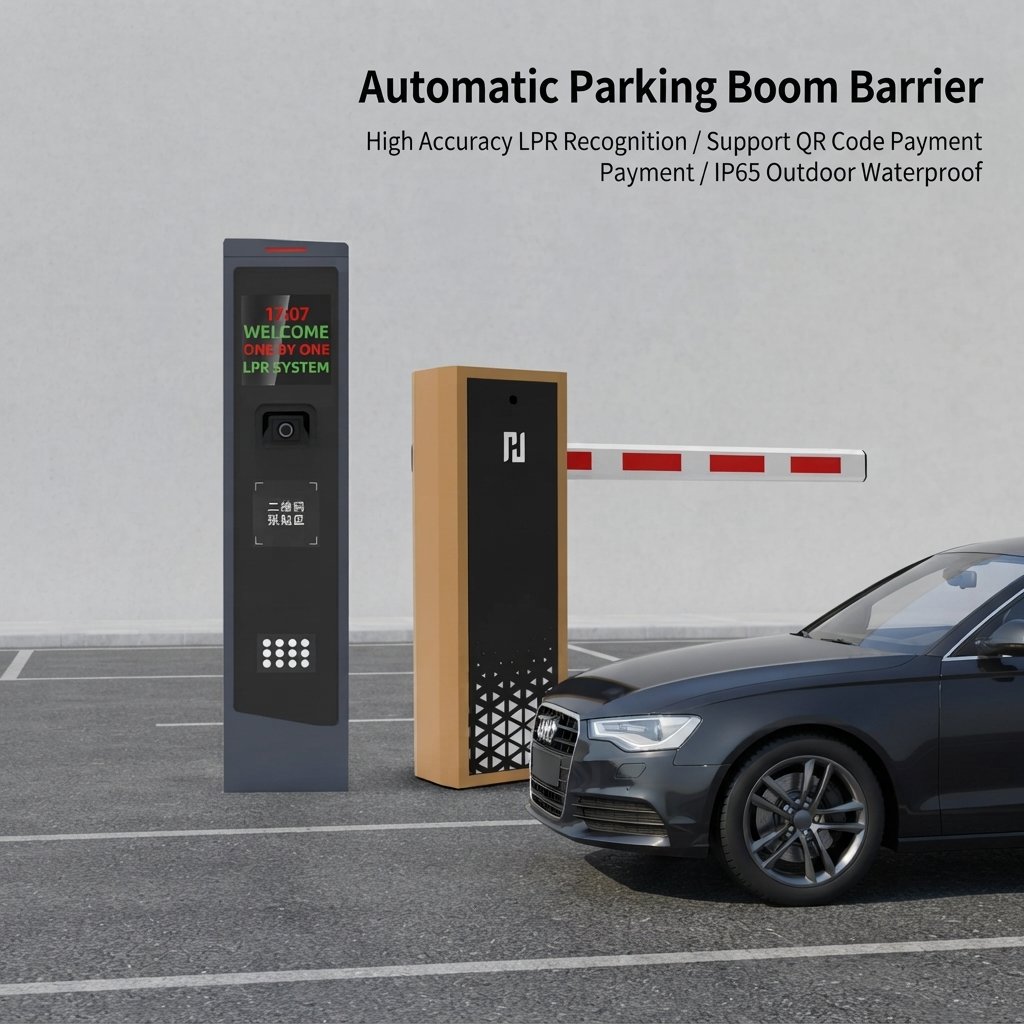
4. The boom barrier opens when access is approved
When the controller receives a valid access command, the automatic boom barrier raises its arm. Vehicle-detection and safety devices should be configured so that the barrier does not descend onto a vehicle. The exact sensor arrangement should be selected according to the lane layout, equipment and risk assessment.
5. The system records the parking session
The platform records the entry event and associates it with the recognised plate or another approved identifier. At exit, the system repeats the identification and checks the session or payment status. If the vehicle is eligible to leave, the barrier opens and the exit event is recorded.
6. Payment and exceptions are handled according to the site setup
For paid public parking, the system may integrate with a payment platform, self-service kiosk or other approved payment workflow. If the plate cannot be read, the payment status is unclear or the vehicle is not authorised, the lane should provide a defined exception process, such as intercom assistance, operator review or an alternative verification method.
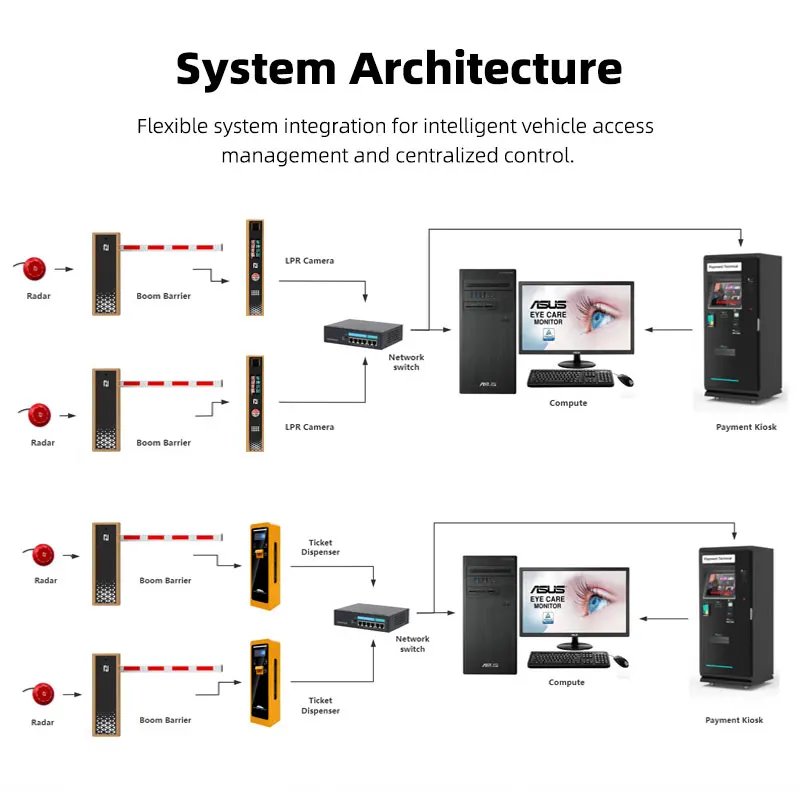
What Equipment Makes Up a Ticketless Parking System?
A typical configuration may include the following components. Not every site needs every item; the final bill of materials should follow the parking workflow and project requirements.
| Component | Role in the system |
|---|---|
| ANPR/LPR camera | Captures and reads vehicle number plates. |
| Automatic boom barrier | Physically controls vehicle entry and exit. |
| Barrier controller | Receives access commands and coordinates barrier movement. |
| Vehicle detector or radar sensor | Detects vehicle presence and supports safe barrier operation. |
| Parking management software | Stores vehicle records, applies access rules and manages parking sessions. |
| Payment interface, if required | Connects parking sessions to the site's payment workflow. |
| Network and power infrastructure | Connects the devices and supports stable operation. |
| Intercom or operator console | Helps staff resolve failed reads, disputes or unauthorised access attempts. |
BAROXON's Singapore catalogue lists automatic boom barrier gates for car parks, high-speed barrier gates, ALPR/LPR number-plate systems, automatic RFID boom barriers and radar sensors. These product categories can form part of a ticketless or automated access-control design, subject to compatibility checks and the software and payment scope agreed for the project.
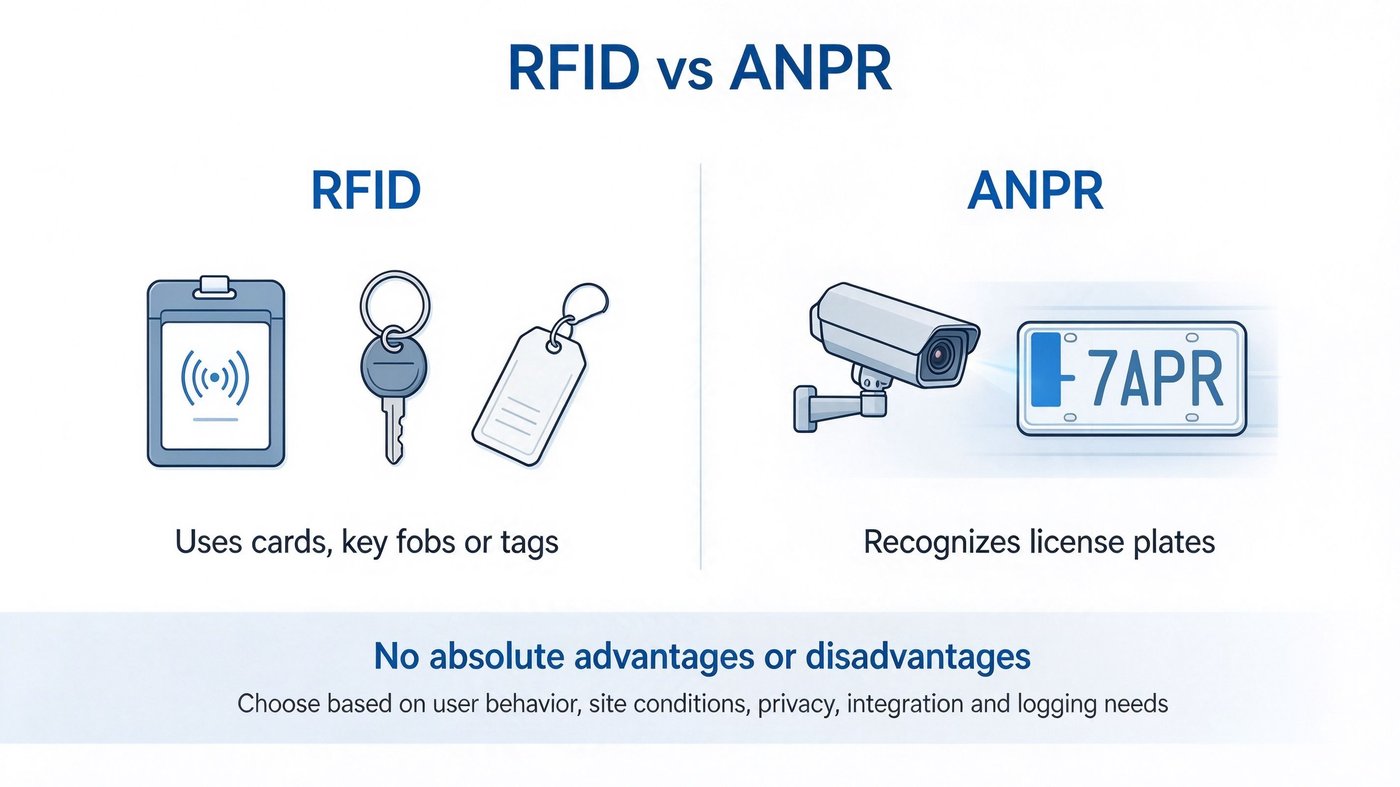
ANPR/LPR or RFID: Which Is Better for Ticketless Parking?
ANPR/LPR number-plate recognition
ANPR/LPR is useful when a site wants to identify vehicles by their registration plates without issuing a physical ticket or requiring every driver to present a tag. It can support visitor workflows and paid parking when the recognition platform, access rules and payment process are integrated correctly. Its performance depends on plate visibility, camera positioning, lighting and configuration. See the automatic LPR parking gate system for a typical configuration.
RFID credentials
RFID is often suitable for known and enrolled users, such as residents, staff or fleet vehicles. An authorised tag or credential is read by a compatible reader, and the access-control system checks its permissions. RFID can be a practical option where a site prefers a dedicated credential, or as a complementary access method alongside number-plate recognition. Compare the automatic RFID boom barrier options if enrolled users are the main traffic.
| Consideration | ANPR/LPR | RFID |
|---|---|---|
| Credential needed | No physical ticket or tag for the driver | Enrolled tag or card carried by the user |
| Typical fit | Public, visitor and paid parking | Residents, staff and fleet vehicles |
| Main dependency | Plate visibility, lighting and camera positioning | Reader range, tag condition and enrolment records |
| Failure handling | Manual verification or alternative credential | Manual verification or temporary credential |
A hybrid approach
Some sites use ANPR/LPR for visitor and public parking while retaining RFID for registered users. This hybrid model can be useful when user groups follow different access rules. The operator should define which credential takes priority, how duplicate records are reconciled and what happens when a camera or reader is unavailable.
Benefits for Singapore Car Park Operators
Less reliance on paper tickets
Removing paper tickets can reduce ticket stock, dispenser maintenance and the need for drivers to keep track of a ticket. Operators should still plan for unreadable plates, system outages and users who need assistance.
A smoother entry and exit process
Automated recognition and barrier control can reduce manual steps at the lane. The actual queue reduction depends on recognition speed, barrier cycle time, lane geometry, vehicle spacing, payment completion and the number of lanes available.
More consistent digital records
When configured properly, a ticketless platform can link entry and exit events to a plate number or another identifier. These records can help with operational reporting and dispute investigation, provided that data quality, access permissions and retention rules are managed appropriately.
Flexible access rules
Different rules can be applied to residents, tenants, employees, visitors, contractors and public parking customers. Before implementation, the operator should map each user category to an approval rule, a fee rule and an exception workflow.
Where Can Ticketless Parking Be Used?
- Shopping malls and retail centres: support public parking and visitor flows, with payment integration where required.
- Office buildings and business parks: manage staff, tenants, guests and service vehicles.
- Condominiums and private residential developments: combine registered vehicle access with visitor procedures, subject to the property's management rules.
- Hospitals and healthcare facilities: separate staff, visitor, service and emergency access where the site design permits.
- Industrial sites and logistics facilities: manage staff and fleet access, potentially combining RFID credentials, vehicle detection and boom barriers.
- Commercial car parks: automate ticket-free entry and exit while retaining a clear process for payment exceptions and disputes.
What Should You Check Before Choosing a Ticketless System?
1. Define the operating model
Decide whether the car park is free, paid, season-parking only, visitor-based or a mix. Confirm how entry is authorised, how payment is collected and how exceptions are handled. The technology should follow the business rules rather than the other way around.
2. Assess the traffic profile
Estimate peak-hour arrivals and departures, the expected number of daily barrier cycles, vehicle mix and lane constraints. A busy public car park may need a different barrier and lane configuration from a small private driveway. Ask suppliers to recommend equipment based on the actual duty cycle rather than headline speed alone.
3. Verify camera positioning and plate readability
Check the camera view, mounting height, approach angle, lighting at day and night, glare, rain exposure and expected vehicle speed. Conduct on-site tests with the actual vehicle types and number plates likely to use the car park.
4. Confirm barrier safety and vehicle detection
Review how the barrier responds when a vehicle stops under the arm, follows another vehicle too closely or remains in the detection zone. Confirm the selected safety devices, controller logic, manual release procedure and maintenance access. Safety behaviour must be tested during commissioning. The checks in this boom barrier installation checklist apply to ticketless lanes as well.
5. Check integration and ownership of the software
Ask which system is responsible for the vehicle database, access permissions, parking sessions, payment status, reporting and remote support. Confirm supported interfaces, data exchange requirements, software licensing, update arrangements and who is responsible for diagnosing faults across third-party components.
6. Plan privacy and cybersecurity controls
Vehicle registration numbers and access logs may be personal data when they can be linked to an individual. Define the purpose of collection, access rights, retention period, security controls and the process for responding to data requests or incidents. Singapore operators should assess their obligations under the Personal Data Protection Act (PDPA) and seek appropriate advice where needed.
7. Prepare a fallback procedure
Define what happens during a network outage, power interruption, camera misread, failed payment or controller fault. Depending on the site, the fallback may include operator approval, intercom assistance, a controlled manual process or an alternative credential. Emergency access and safe vehicle movement must remain part of the plan.
8. Request a realistic site demonstration
Ask the supplier to demonstrate entry, exit, payment checks, failed recognition, unauthorised access, tailgating scenarios, manual override and event reporting. Test the full workflow, not only whether the camera reads a plate or the boom arm lifts.
How BAROXON Products Can Fit into a Ticketless Parking Design
BAROXON's published product range includes automatic boom barriers, high-speed barrier gates, ALPR/LPR car-plate systems, RFID boom barriers and radar sensors. For a ticketless car park, the design may pair an LPR camera with a compatible barrier controller and parking-management platform; radar or other vehicle-detection devices can be selected where appropriate for lane safety and detection needs.
The right configuration depends on the existing parking software, payment provider, lane layout, traffic volume and required access rules. Before ordering, request written confirmation of interface compatibility, the included software functions, installation responsibilities, testing scope, warranty and after-sales support. Do not assume that every listed product automatically includes a complete parking-management or payment platform. The parking access control product range shows the available equipment categories.
Frequently Asked Questions
Is a ticketless parking system the same as an ANPR parking system?
Not exactly. ANPR/LPR is one way to identify a vehicle. A ticketless parking system also needs rules for access approval, session records, exit validation and, where applicable, payment and exception handling.
Can ticketless parking work with an existing boom barrier?
It may be possible if the existing barrier controller, camera, parking software and required interfaces are compatible. A site survey and integration test should confirm the wiring, control signals, safety devices and software workflow before implementation.
Does a ticketless system eliminate all queues?
No. It can remove some manual steps, but queues may still occur because of peak demand, unreadable plates, payment delays, barrier cycle time, downstream congestion or manual exceptions. Lane capacity and the complete operating process should be assessed together.
Can RFID be used instead of number-plate recognition?
Yes, for sites where enrolled users can carry or use authorised RFID credentials. RFID may also complement ANPR/LPR when different groups need different access methods. The choice should reflect user behaviour, security requirements and operating costs.
What happens if the camera cannot read a number plate?
The system should follow a predefined exception procedure. Depending on the configuration, an operator may verify the vehicle, use an alternative credential or direct the driver to an assistance point. The site should test these scenarios before opening.
What information should a supplier provide before quotation?
Provide a site plan, number of lanes, traffic estimates, user categories, payment requirements, existing equipment details, integration expectations and preferred fallback procedure. Ask for a proposed architecture, compatibility statement, scope of supply, exclusions, commissioning plan and support terms.
Conclusion: Is a Ticketless Parking System Right for Your Car Park?
A ticketless parking management system can simplify vehicle entry and exit by linking number-plate recognition, boom barriers and parking software into one workflow. For Singapore properties, the best solution is the one that matches the site's traffic profile, access rules, payment process, safety needs and data-protection obligations, not simply the system with the most features.
If you are planning a new car park or upgrading an existing lane, review BAROXON's boom barrier and ALPR/LPR product options, then request a configuration based on your site layout and integration requirements. Confirm all technical specifications and software functions in writing before placing an order. For background on the equipment itself, read what a parking barrier is and where it is used and how RFID parking barriers manage vehicle access.
Latest News
Baroxon® | Leading Boom Barrier Manufacturer
Advanced Security Access Control and Intelligent Parking Solutions.
Company Strength
Adequate Inventory
Fast Shipping
Our Products
CONTACT US
Address: No. 2 Wanshou Road, International Innovation Industrial Park, Jinan, Shandong, China




© COPYRIGHT 2025 Baroxon® | Leading Boom Barrier Manufacturer


Contact Us
Professional Manufacturer of Vehicle Barriers & License Plate Recognition Cameras,Smart Parking Access Control Solutions for Global Clients,Reliable Barrier Gates + LPR Systems, Customized to Your Project,From residential communities, commercial shopping malls, industrial parks to highway toll stations, our matched barrier & LPR sets can realize automatic license plate identification, automatic gate lifting, real-time access records, automatic charging and remote management.