
What Is a Parking Barrier Gate and How Does It Work?
Release time:
2026-11-03
A parking barrier gate is a vehicle access control device that uses a powered boom arm to allow or restrict vehicles entering and leaving a site. In Singapore, automatic barrier gates are commonly considered for condominium entrances, office buildings, commercial car parks, industrial facilities and logistics yards where operators need a controlled, repeatable way to manage vehicle movements.
A barrier gate is usually one part of a wider system. Depending on the site, it may work with RFID cards or tags, a licence plate recognition camera, a ticketing or payment system, a guard station, a vehicle detector or parking management software. The right configuration depends on traffic volume, security policy, driveway layout and the equipment already installed.
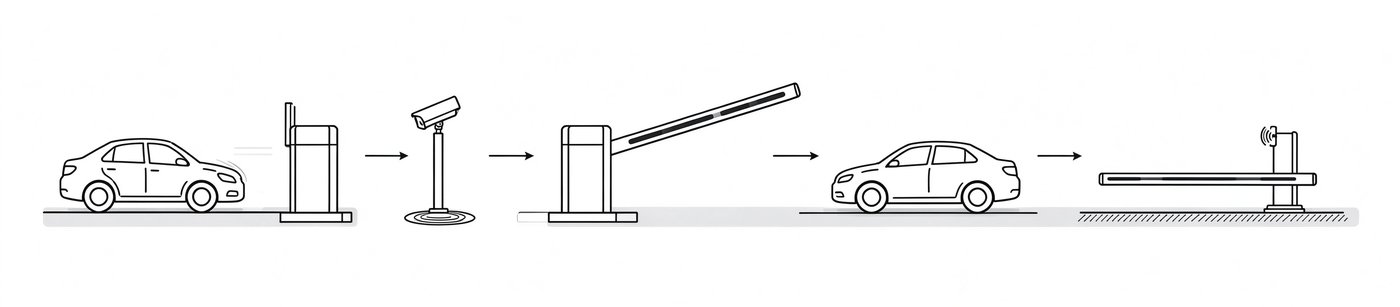
1. What Are the Main Parts of a Parking Barrier Gate?
Although designs vary by model, an automatic parking barrier commonly includes the following components:
- Barrier cabinet and drive mechanism: the enclosure houses the motor, transmission and control components that move the boom arm.
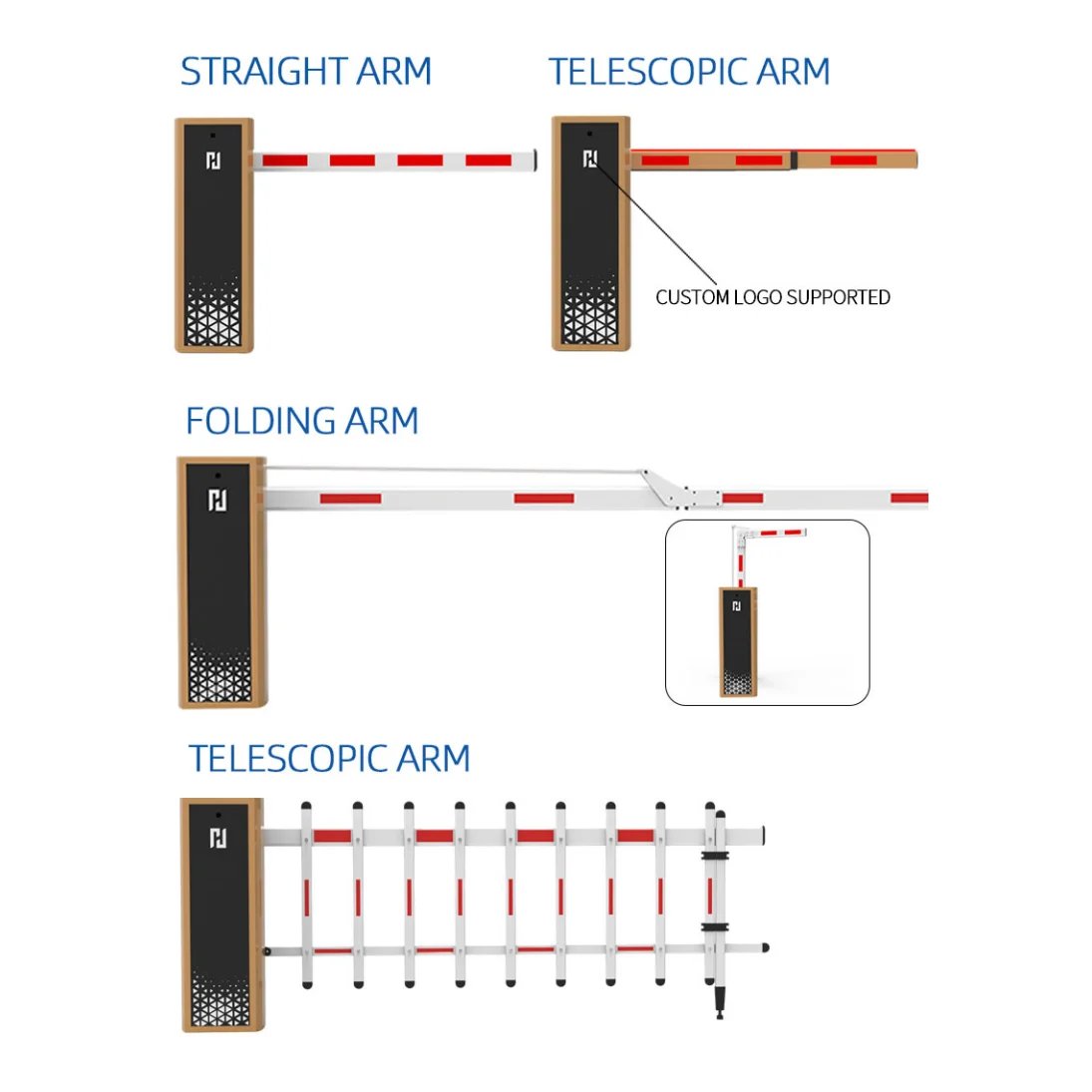
- Boom arm: the horizontal arm blocks or clears the vehicle lane. Depending on the model, it may be straight, folding or fence-style.
- Controller: receives commands from the access system and manages the opening and closing sequence.
- Access authorisation device: may be an RFID reader, LPR/ANPR camera, ticketing device, intercom or guard-operated control.
- Vehicle detection and safety devices: depending on the design, these may include a loop detector, radar sensor, photoelectric sensor or anti-collision function.
- Power and communications: electrical supply and supported interfaces connect the barrier to other equipment.
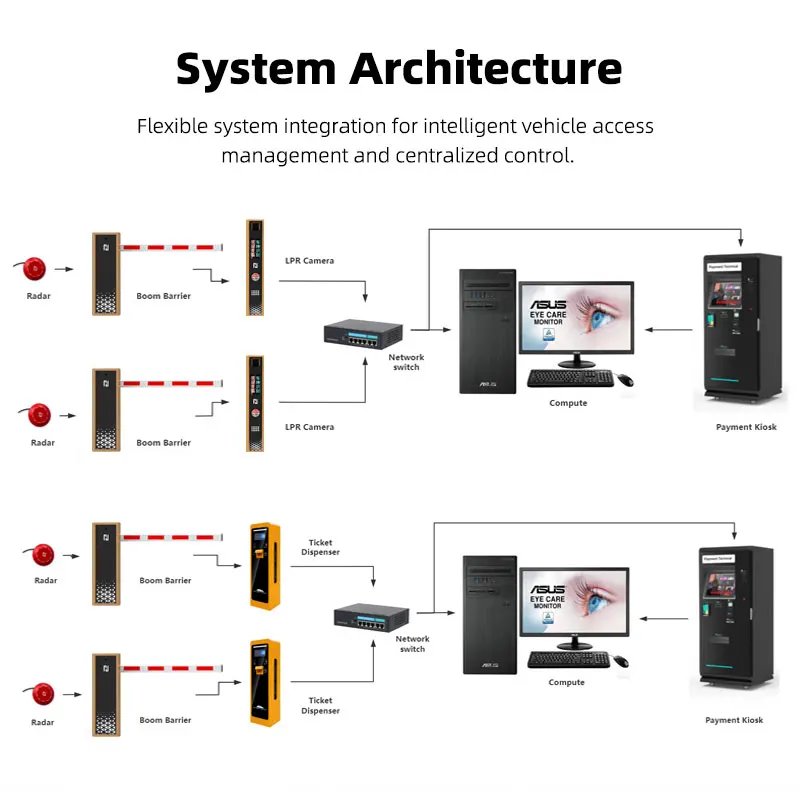
2. How Does an Automatic Parking Barrier Gate Work?
A typical automatic barrier sequence can be explained in five steps. The exact sequence depends on the access-control software, sensors and controller configuration.
Step 1: A vehicle approaches the entrance
A driver approaches the entry lane and stops at the designated point. Signs, lane markings and the location of the reader or camera should make it clear where the driver needs to wait.
Step 2: The system checks access permission
The system checks the credential or vehicle record. For an RFID setup, a reader detects an authorised card or tag. For an LPR/ANPR setup, a camera captures the number plate and software checks it against the configured access list. A guard or intercom may be used for visitor approval where required.
Step 3: The controller receives an opening command
If the access request is accepted, the access-control equipment sends an opening signal to the barrier controller. If the credential is invalid or approval is not granted, the barrier should remain closed according to the site's configured rules.
Step 4: The boom arm rises to clear the lane
The drive mechanism raises the arm so the authorised vehicle can pass. Opening time varies by barrier model, arm length and settings, so the specification should be checked for the exact configuration rather than assuming every gate has the same speed.
Step 5: Vehicle detection supports safe closing
After the vehicle passes, the system uses its configured detection and control logic to determine when the arm can close. A loop detector, radar or other supported safety device may help identify a vehicle in the lane and reduce the risk of the arm lowering onto it. The installer should test the complete sequence during commissioning.
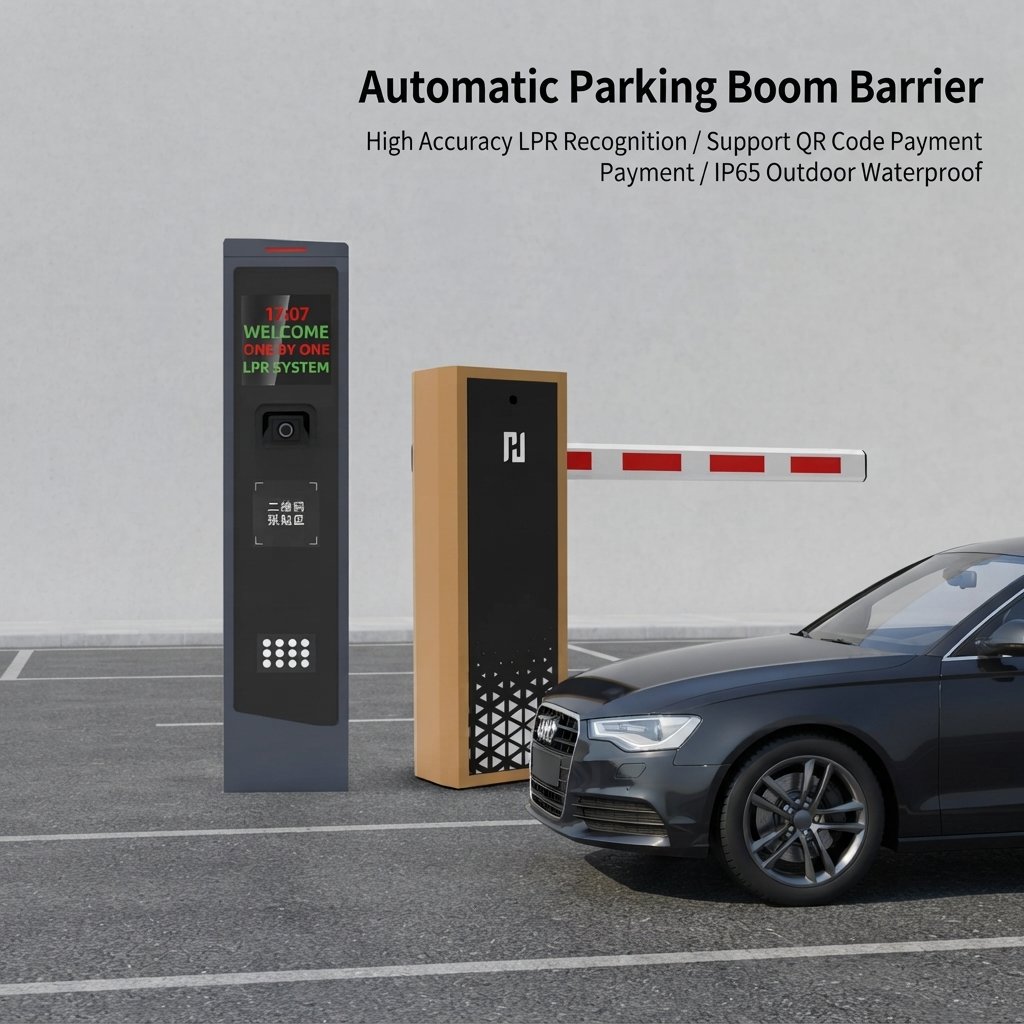
3. Parking Barrier Gate vs. Access Control System
A barrier gate physically controls the lane, while the access-control system decides whether a vehicle should be allowed through. A barrier on its own may be operated by a push button or guard; an integrated setup can make decisions based on RFID credentials, number plates, tickets, payments or a management platform.
| Component | Main role |
|---|---|
| Boom barrier gate | Physically opens or blocks the lane |
| RFID reader | Reads authorised cards or tags |
| LPR/ANPR camera | Captures and recognises vehicle number plates |
| Radar or loop detector | Detects vehicle presence or supports safety logic |
| Parking management software | Applies access rules and may manage records, payment or occupancy |
4. Common Types of Parking Barrier Gates
Standard automatic boom barrier
A standard boom barrier is often considered for general vehicle entrances where traffic demand and operating cycles fit the selected model. It may suit residential, office and smaller commercial car parks.
High-speed barrier gate
A high-speed barrier may help reduce waiting time at busy entrances. Compare the complete opening and closing cycle, boom length, safety equipment and rated operating duty, rather than judging suitability by the advertised lift time alone.
Folding-arm barrier
A folding arm can be useful where the driveway has limited overhead clearance, such as some basement car park entrances. Confirm the actual folding path and installation dimensions for the selected model.
Fence-style boom barrier
A fence-style arm can provide a more substantial lane boundary for applications that call for it. Confirm the vehicle profile, wind exposure and manufacturer's installation guidance before selecting this configuration.
5. How RFID and LPR/ANPR Work with a Barrier Gate
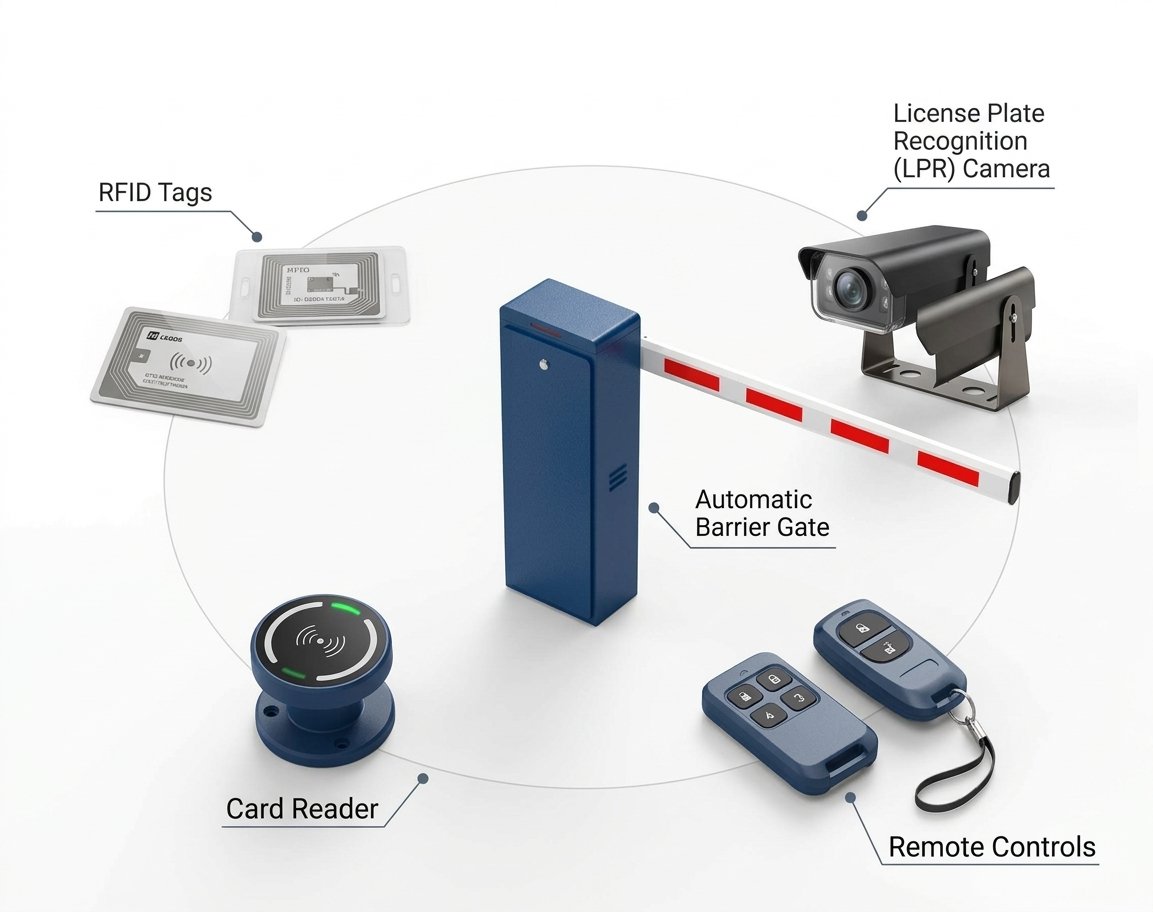
BAROXON's product range includes automatic RFID boom barriers and ALPR/LPR car plate systems. These technologies provide different ways to identify an authorised vehicle and can be specified separately or as part of a wider parking system, subject to model compatibility and project requirements.
- RFID: a reader detects an authorised card or tag. This is often considered for registered residents, staff, season-parking users or fleet vehicles.
- LPR/ANPR: a camera captures a vehicle's number plate, and the system checks it against the configured access records. This can support ticket-free entry where the full system is designed for it.
- Combined access: some sites may use more than one method, for example LPR for registered vehicles and guard approval for visitors.
Before purchasing, confirm that the barrier controller, reader or camera, software and existing access-control platform can communicate correctly. Do not assume every barrier model includes an RFID reader or LPR camera as standard. The difference between RFID and ANPR parking systems is covered in more detail separately.
6. Safety Devices: Why Vehicle Detection Matters
A moving boom arm can create a hazard if the system is poorly specified, installed or maintained. The correct safety arrangement depends on the site, traffic direction, pedestrian movement and the barrier model. Supported devices may include vehicle loop detectors, radar sensors, photoelectric sensors and anti-collision or auto-reverse functions.
Ask the installer to demonstrate how the system behaves when a vehicle stops under the arm, when an obstacle is detected and when power is interrupted. Keep pedestrian paths clearly separated from vehicle lanes wherever practical, and follow the manufacturer's instructions for testing and maintenance.
7. Where Are Parking Barrier Gates Used in Singapore?
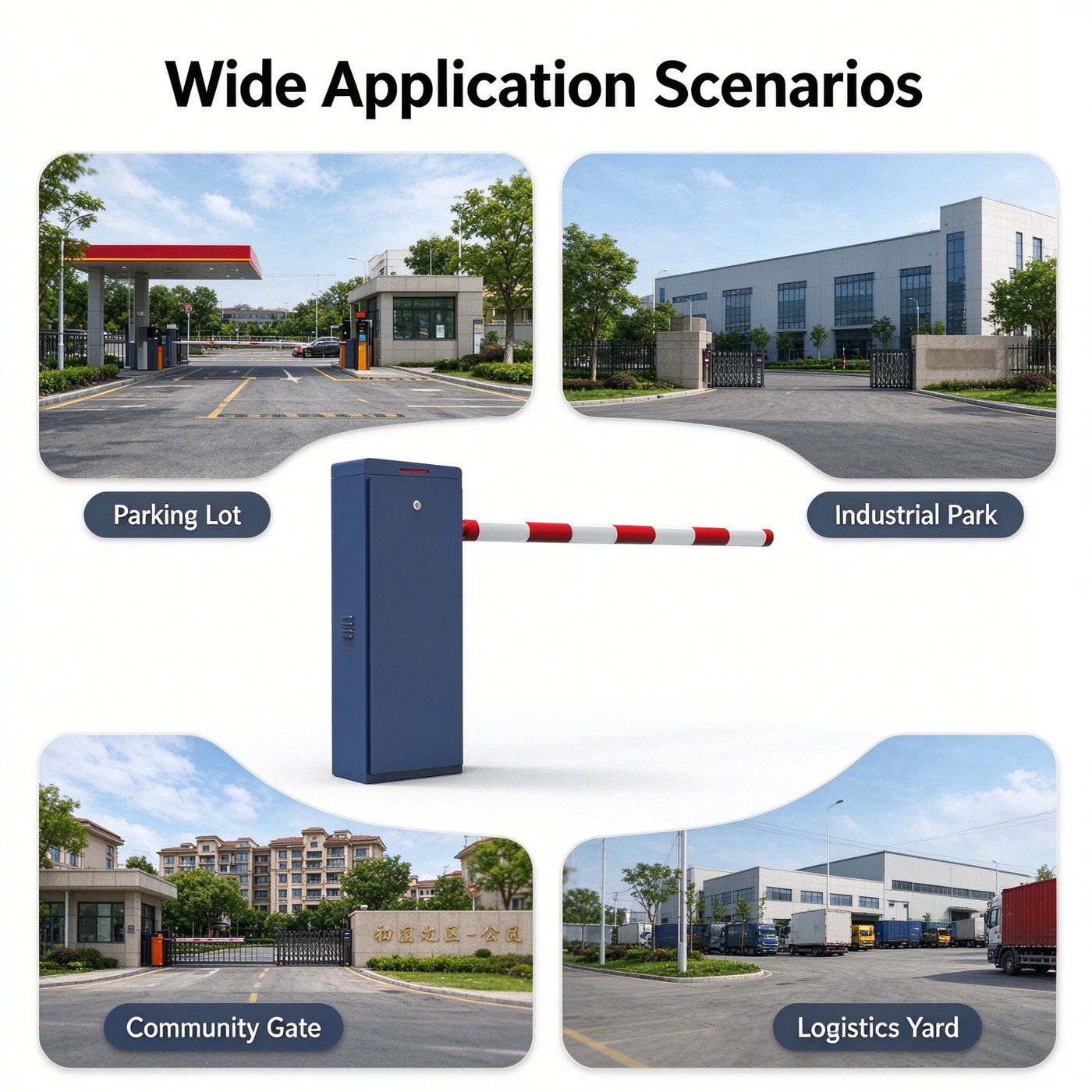
Condominiums and residential estates
A barrier gate can help manage resident and visitor vehicle entry. RFID, LPR/ANPR or guard approval may be considered according to the estate's visitor process, security policy and existing management system.
Office buildings and commercial car parks
These sites may prioritise peak-hour throughput, season-parking access, payment integration and reliable records of vehicle entry and exit.
Factories and logistics warehouses
Frequent vehicle movements may call for a barrier and detection arrangement suited to the vehicle types and operating cycle. Heavy goods vehicles require careful lane layout and safe detection planning.
Commercial parking and transport facilities
A barrier can be combined with LPR/ANPR, ticketing or payment systems where the selected equipment and software support the required workflow. High-volume sites should evaluate the complete system's performance rather than the barrier alone.
8. How to Choose a Suitable Parking Barrier Gate
Before requesting a quotation, document the site's actual requirements:
- Peak-hour vehicle volume and expected queue length.
- Clear lane width and overhead clearance.
- Vehicle types, including vans, buses or trucks.
- Required boom arm type and length.
- Operating hours and expected daily cycles.
- Access method: RFID, LPR/ANPR, ticketing, intercom or guard control.
- Safety devices and pedestrian arrangements.
- Existing parking software, payment system and available interfaces.
- Installation conditions, weather exposure, maintenance access and spare-parts requirements.
- Warranty, lead time, commissioning and after-sales support.
Request a model-specific datasheet and a written quotation that identifies the barrier model, boom length, controller, included accessories, safety devices and integration scope. Confirm all performance figures against the proposed configuration. The checks in this boom barrier installation checklist help confirm site readiness before ordering.
Why Consider BAROXON?
BAROXON's Singapore catalogue lists boom barrier gates for car parks, high-speed barrier gates, ALPR/LPR car plate systems, automatic RFID boom barriers, radar sensors and related parking and access-control products. Its products are described for applications including residential communities, commercial parking, industrial and logistics facilities, and high-traffic transport locations.
For a suitable proposal, share the site layout, traffic estimate, arm length, access method and integration needs. Ask BAROXON to confirm the exact model, compatible safety devices, supported interfaces, installation requirements, warranty and service arrangements before ordering. The full parking access control product range can be reviewed by equipment category.
Frequently Asked Questions
What is the difference between a parking barrier gate and a boom gate?
The terms are often used interchangeably. "Parking barrier gate" describes the vehicle-control application, while "boom gate" commonly refers to the horizontal arm barrier itself. Product terminology may vary by supplier and market.
Does a parking barrier gate open automatically?
It can, when connected to an access-control device or software that issues an authorised opening command. Depending on the configuration, the trigger may come from RFID, LPR/ANPR, ticketing, a payment system or a guard.
Can a barrier gate work with RFID and LPR/ANPR?
Potentially yes, if the selected controller, readers or cameras and software support the intended integration. Confirm the complete equipment list and interface compatibility with the supplier rather than assuming the functions are included in every model.
What safety devices should a parking barrier have?
The appropriate arrangement depends on the site and model. Vehicle loop detectors, radar, photoelectric sensors and anti-collision or auto-reverse functions may be relevant. Have a qualified installer confirm and test the safety design for the actual lane.
How fast does an automatic parking barrier open?
Opening time varies with the model, boom length, motor and settings. Use the verified datasheet for the exact configuration being quoted, and consider the full operating cycle and safety sequence when estimating traffic capacity.
Conclusion
A parking barrier gate controls the physical movement of vehicles, while access-control equipment determines which vehicles may pass. When these elements are correctly selected and integrated, a barrier system can help manage entry and exit at Singapore condominiums, offices, commercial car parks and industrial sites. The best choice depends on traffic volume, driveway geometry, access method, safety requirements, integration and ongoing support. Confirm model-specific specifications before purchasing.
Latest News
Baroxon® | Leading Boom Barrier Manufacturer
Advanced Security Access Control and Intelligent Parking Solutions.
Company Strength
Adequate Inventory
Fast Shipping
Our Products
CONTACT US
Address: No. 2 Wanshou Road, International Innovation Industrial Park, Jinan, Shandong, China




© COPYRIGHT 2025 Baroxon® | Leading Boom Barrier Manufacturer


Contact Us
Professional Manufacturer of Vehicle Barriers & License Plate Recognition Cameras,Smart Parking Access Control Solutions for Global Clients,Reliable Barrier Gates + LPR Systems, Customized to Your Project,From residential communities, commercial shopping malls, industrial parks to highway toll stations, our matched barrier & LPR sets can realize automatic license plate identification, automatic gate lifting, real-time access records, automatic charging and remote management.